Is Australia driving backwards? /  by Tom Oliver Payne

430traffic01.jpg

"We will start work within 12 months on Melbourne's east-west link, Sydney's west connects, Brisbane's Gateway Motorway Upgrade, Adelaide's South Road and Tasmania's Midland Highway. As well as key roads in Perth and parts of the Bruce Highway. Because when you're stuck in traffic jams, you aren't at work, or at home with your family"

Opposition leader, Tony Abbott - 16th May, 2013

In a country that's falling behind the rest of the world in transport infrastructure, the NSW Government has recently announced that traffic congestion is costing Sydney $51.1 billion a year. It's currently estimated to be the 7th most congested city in the western world.

Forgetting that there is a direct correlation between road supply and demand, the federal opposition leader, Tony Abbott has then stated today that if elected he will spend MORE money on roads. All without a single mention of direct federal investment or state support for much need rail links.

Major cities around the world are investing into rail and cycle infrastructure in order to more effectively integrate multiple modes of transport with residential and business centres.

This does not mean they're getting rid of cars or roads - it simply means they're providing alternative modes of transport to move away from the dangerous car/oil addiction. These steps take significant pressure off road infrastructure, imported oil reliance and make for much more healthy, pleasant and efficient cities to live and work.

In addition the city's Β£16 billion Crossrail line, London's mayor has just announced Β£1 billion for cycling infrastructure.  Similarly, in the USA, with increased investments into alternative modes of transport, national rail commuter numbers have hit an all time high.

After a sudden increase in car ownership over the past couple of decades, Chinese cities have been feeling the negative effects of over-congestion. Planners and politicians are now working hard to resist a reliance on the car. Hangzhou has recently opened the world's largest bike share scheme, and the country's high speed rail is expected to increase from 10,000 to 120,000 kilometres over the next 7 years.

As the rest of the world takes steps towards more sustainable forms of transportation, Australia seems to be moving in the wrong direction. With promises to build more and more roads, it seems it will take Australians even longer to be at work, or at home with their families.

Feature image courtesy SMH.
Will La Sagrera help to stimulate the barcelonian economy? /  by Tom Oliver Payne

The recession continues to cripple the Spanish housing market.

While Barcelona remains is one of the strongest cities in the country, high unemployment rates, low wages and a decline in foreign investment means that many residents are unable to pay housing rental and services bills. And as a result, homelessness and mobbing continue to rise. 

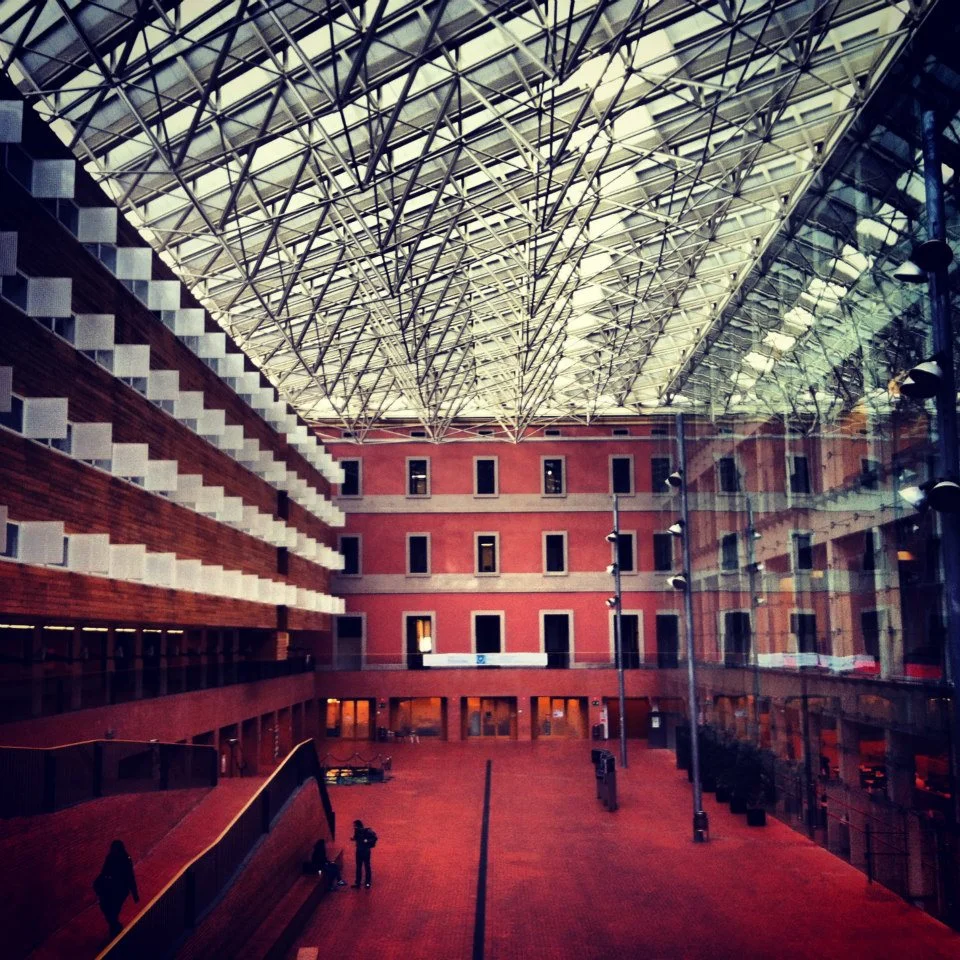
Last week I travelled down to Barcelona to learn about the district being regeneration of the La Sagrera district. The Sagrera high speed railway station, promises to deliver economic growth through connections to Madrid and France.

The government has told the locals that the area will boom.  

But on the ground, I worry this could be a white elephant or an over-promise with false hope. Grandiose buildings stand empty, and the areas surrounding construction sites remain run down or derelict. 

The Spanish Government has a good record of promising loads of big stuff that will regenerate the economy, only to find that it creates more debt. Let's hope this isn;t another one. 

Time will tell whether or not this major development will actually see benefit for the local community. I hope to provide an update in a few years down the line. 

Sydney’s Barangaroo: Repeating Mistakes of the Past? /  by Tom Oliver Payne

sydney-skyline.jpg

Casino tycoon James Packer, is bidding to build a resort-style casino on the Sydney's most central and beautiful foreshores - Barangaroo.

Every city has had its planning blunders. In fact, a number of monstrosities are probably being constructed near you right now. I’m sure you can name a few. Too often mistakes are made today because past errors have been too easily forgotten.

Throughout the 60β€²s, the Sydney construction industry was booming; skyscrapers were being erected across the central district, new motorways were extending into the vast suburbs and ex-industrial foreshore sites were quickly being developed into large housing estates as industry moved further inland. β€œBrave new world” masterplanning techniques embedded the development industry and the city saw the loss of some of its oldest buildings and most vital green spaces.

The Green Ban movement of the 70β€²s changed all of this. Between 1971 and 1974 around 40 construction bans were imposed by the Builders Labourers Federation to prevent the destruction of buildings or green areas. The most controversial was the ban to halt the redevelopment of The Rocks. After years of strikes and bloody confrontations, the plan to redevelop Sydney’s oldest suburb was altered to ensure strict preservation of historic buildings. Today,The Rocks is one of the city’s largest tourist destinations.

So, what did Sydney learn from the Green Ban movement? According to the new plans to redevelop Barangaroo, not a lot. While the bans did reform planning policy and change the development culture of the entire nation, it seems that in 2013, all has been forgotten.

Casino tycoon James Packer, son of the famous Kerry Packer, is bidding to build a resort-style casino (alongside multiple office buildings) on the city’s most central and beautiful foreshores – Barangaroo.

Interestingly, Barangaroo sits just down the street from The Rocks. So, with this in mind one would hope Packer has carefully considered the area’s history but it doesn’t look like it. All Packer seems to care about his how his β€œiconic project” can compete with Melbourne and China. With so much support for his development, it seems that the rest of the city has forgotten as well. If we’ve learned anything from Sydney’s past, it’s that the preservation of itsnatural features, particularly the harbour and foreshores, are what has made it such a globally attractive city.

Cities don’t succeed by copying others. Rather, they become far more unique and exciting by learning from their mistakes and enhancing their best features. I don’t know about you, but I’d say another tacky casino doesn’t seem to fit that mould.

Click here to check out this article on the Urban Times.

Feature image courtesy aussiegall/Flickr.

Jack Mundey at The Rocks, Sydney /  by Tom Oliver Payne

jux__vhils1.png

Following up the Barangaroo article I wrote for the Urban Times, I was informed about this beautiful temporary mural of Jack Mundey down at The Rocks.

The exhibition Dissolve by  Portuguese artist Alexandre Farto ('Vhils') (see on Artsy) acts to once again remind us of Sydney's very important urban history... One that should not be forgotten in today's planning context.

What an awesome piece of work. If you're in Sydney check out the this page for more info on the gallery.

Feature image by Baddogwhiskas.

I just went to Paris: I loved its boulevards /  by Tom Oliver Payne

19488_10152015943211777_290678586_n.jpeg

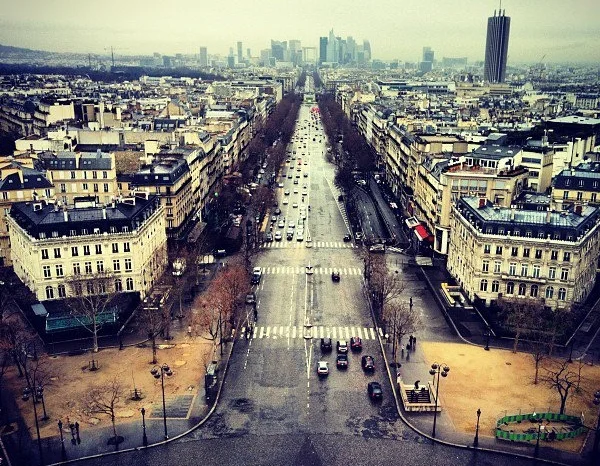
I just got back from a few days in Paris. Perhaps the most recognisable features of the its urban landscape are its huge boulevards and symmetrical road networks.

Its large avenues, boulevard rings and urban squares are not a historical accident, but were part of a major plan to modernise the city in the 18th and 19th century with the radical plans of Baron Georges-EugΓ¨ne Haussmann. Funded by NapolΓ©on III, The Haussmann Plan completely restructured Paris, giving it its present day form. Cutting through traditional alleyways, new rationally-designed boulevards and avenues and new open spaces established the foundation of what is now one of the most popular and highly regarded urbanist features of Paris.

Haussmann took a highly militarised approach to planning and has been criticised for the demographic and social effects of his urbanism operations. Even today, he is still seen as both a 'hero' and 'destroyer of Paris'. Looking back however, it seems to me that these major changes just 150 years ago have brought significant benefits to Paris -  changes that would be virtually impossible to implement and fund today. In addition to their obvious function to create public spaces and increase pedestrian, bicycle and vehicle mobility, the boulevards create a beauty that few other cities in the world possess. These shots I took over the last two days illustrate the perfect uniformity created by the Haussmann Plan.

Photos by Tom Payne.

All photos by Tom Oliver Payne

All photos by Tom Oliver Payne