Last week I realised what I love about Paris /  by Tom Oliver Payne

It’s no wonder Paris intrigues people: through films, the city is portrayed as place of love, romance and elegance; through history books, we are told of its role in the French revolution and the downfall of the Nazis; and through news, we are reminded of the social tensions faced by the city’s role as a cultural melting pot.

However, every time I step back into the Paris, I realise there’s something else distinct about the city. It seems to be a place where people actually sit talk, interact and socialise on the streets. At a time when cars and technology run our lives, this is a strange but incredible trait for the centre of a major city.

After a quick trip around Europe last week for a media project (...more on that later), I touched down at Paris’ Orly airport. Just two weeks after the terrorist attacks, and two days before COP21, I was pretty interested to understand what the vibe was going to be like. I imagined a city in lock-down: empty streets and eerie vibes.

As I stepped out into Saint-Lazare, there were tonnes of people talking, walking and generally hanging out. The streets were full of life and the wine was flowing.

I’ve decided to lay down a few guesses why Paris might be such a social city...

paris1.jpg

A social culture

Parisians, and the French more generally, seem to have a respect for ideas, curiosity and intelligence. So, sitting about and conversing on all these things should only be natural, right?

Urban design

Paris is a walking and cycling city, and its streets are filled with shops, cafes and restaurants (or as architects would call it – ‘active frontages’). This along with awesome public spaces, wide footpaths and places to sit, of course it's a place where people are going to hang out?

Al fresco

Believe it or not, loads of cities across the globe restrict the things that make humans healthy and cities successful. In Australia and the USA, drinking alcohol is super-restricted, but this only seems to perpetuate problems with violence. I guess in Paris, where drinking in all sorts of places is accepted and respected, this helps the streets to feel safe and naturally lively?

Of course there are loads of things that make Paris special, but in an era of increasing social isolation, it’s awesome to spend time in a big city where people of all ages seem to appreciate being able to just hang out with each other in public spaces.

It would be awesome to hear other people's thoughts. What do other people love about Paris?

img_3395-copy.jpg

INSTAGRAM


What is Templehof? /  by Tom Oliver Payne

A couple of weeks ago I took off to Berlin to explore the city. A few friends suggested we head out to 'Templehof' one afternoon. I had absolutely no idea what they were talking about.

Walking from the amazing Kreuzberg (and getting lost in a cemetery along the way), I decided to finally ask the question, "Ahhh guys, what is Templehof, anyway!?" The response wasn't really what I was expecting. The answer I got was simply "abandoned airport".

Having checked out quite a few cities, I've been managed to see some pretty interesting places: Africa's largest slum, a huge urban reservoir in the south of Spain, and to the top of the world's tallest building. I never thought however, that I would be standing in the middle of Berlin in a derelict Nazi-Germany airport, comprising what still is today, one of the world's largest buildings.

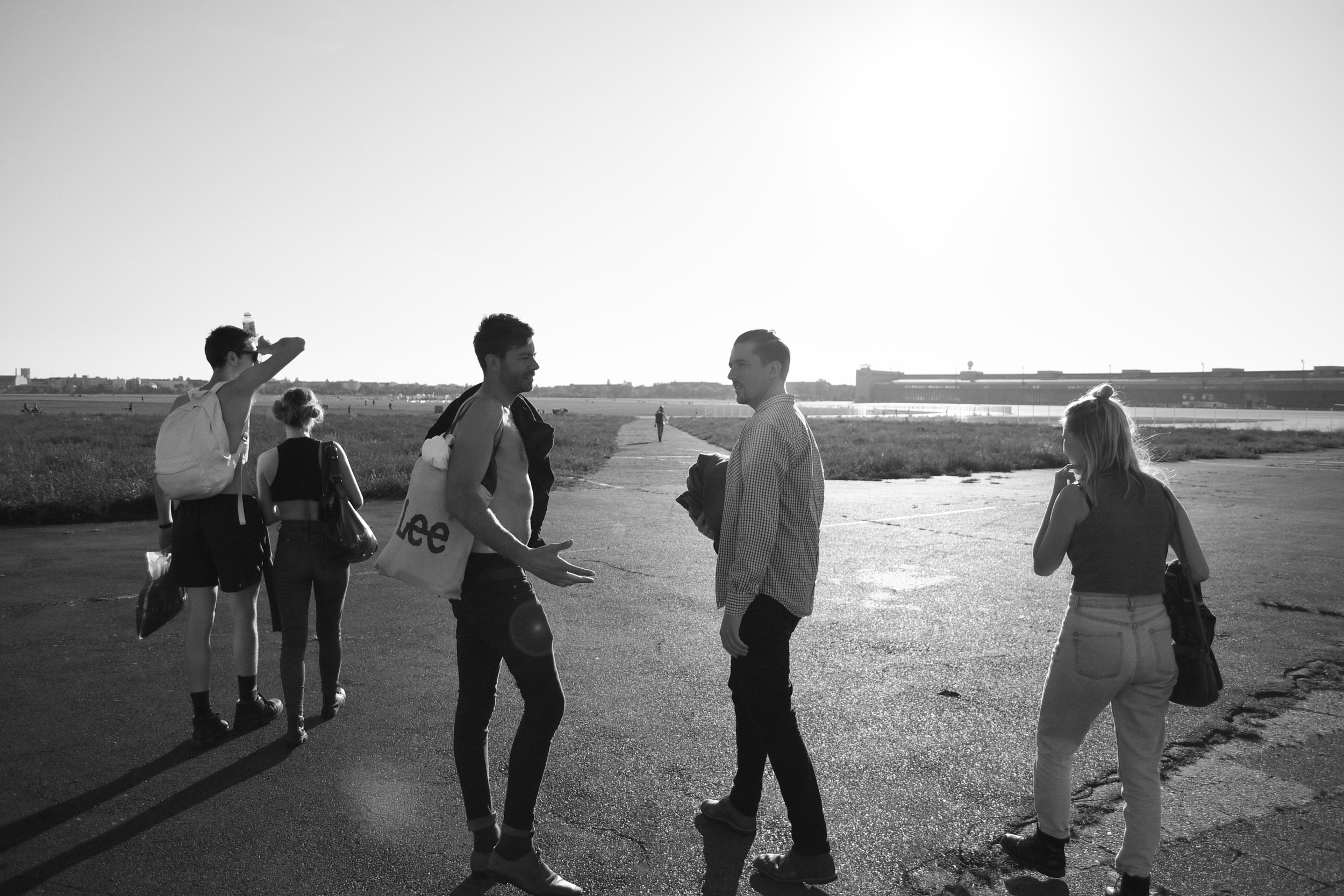
Laying in the grass, soaking up the last of the Autumn sunshine, I decided I'd do a bit of googling about the place that surrounded me. The more I dug, the more I found it difficult to believe where I actually was.

Built in 1927 this place was for a long time one the world's busiest airports - often referred to as the gateway to Europe. Designed by the Nazi government to resemble an eagle in flight from above, the airport is still considered by one of the world's most renowned architects "one of the greatest buildings of the modern age".

As I looked towards the main building I could see an old US troops carrier with stars embedded on its side. The plane looked more like something out of a 1950s Hollywood film then something that belonged in the deepest depths of Germany. Well, there's a reason why it was sitting there. Directly on the divide between the east and the west, Templehof was the epicentre of a global political divide. At the end of the World War II and into the Cold War, Templehof became the key air base for US forces in Europe.

As I heard bellowing electronic music begin to bellow from one of the hangars, how was it then that a place of such historical significance was now a place for parties, beers, sports and generally mulling about?

In typical Berlin-style, what could have become a derelict old airport was slowly opened to the public. By 2010 the government decided that instead of redeveloping the land for prime real estate, it would be opened as a massive public park. Then, in September 2015, it was decided that it would also be used to temporarily house Syrian refugees.

What the government and voters have decided to forego in short-term financial gain, has built a long-term asset which not only gives the local community and tourists an amazing place to hang out, but helps to build Berlin's brand as an incredibly liberal, unique and creative global city.

Berlin is a city which has been tormented by an incredibly dark past. This history hasn't been erased. Instead, it's been recaptured and re-invented to develop itself as one of the most forward-thinking cities in the world. Seriously, if you're in Berlin, take a stroll to this strange and wonderful place - it's worth it.

INSTAGRAM


Imitate to innovate: Vitoria-Gasteiz shows how cities can address 21st century challenges /  by Tom Oliver Payne

A few weeks ago I had the chance to travel down to Vitoria-Gasteiz with the European Commission, and in collaboration with the German NGO for sustainability, Verkehrsclub Deutschland (VCD). Basically, the idea was to get a bunch of urban-related journalists to learn about the city and spread the news about some of it's sustainable innovations. It was for the right reason. The city and the governance model which had been set up to bring about change was seriously impressive.

All I could think was, why aren't other cities using this approach? An article and short film were published to both This Big City and the Sustainable Cities Collective. For your ease, I've also provided below. Enjoy.

"Imitation is not just the sincerest form of flattery – it’s the sincerest form of learning."

– Bernard Shaw

The Spanish city of Vitoria-Gasteiz has recently transformed itself from a congested and car-dominated city into one of the most pedestrian and bicycle-friendly places in Europe. It didn’t achieve this by going at it alone. Its key to success was learning from others.

Cities today are faced with challenges like never before. Rapid population growth, increasing inequality, pollution and congestion are not isolated issues. Rather, they are problems faced by cities across the globe.

While some places are quickly learning to change their old ways and adapt to new circumstances, others are finding it a little more difficult. Perhaps it’s time that those struggling cities to stop simply looking inward, and instead learned from others. After all, if people and businesses copy one-another to succeed, why can’t cities?

We now know that our addiction to the car was one of the greatest urban mistakes of last century. Weaning ourselves off this addiction is now one of our greatest challenges. While some cities reconfigure to prioritise people over cars, others are still stuck in the 70s. Sadly, it’s not only the environment that pays the price. Each year thousands of innocent people are killed because urban authorities can’t seem to re-adapt cities for people, rather than for cars.

Over the past few weeks in London we’ve seen outrage over the death of yet another cyclist. In all six of the deaths this year, the incidents involved a collision with a lorry. The problem is obvious: trucks and cars should not use the same lane of traffic as bicycles. The solution to this problem is also simple: separate the modes of transport.

Although people across London are fuming, there seems to be constant resistance to making logical junction and thoroughfare improvements. Surely the hundreds of innocent commuters dying in urban areas each year is enough for a city to make some drastic changes? Well, apparently not.

Although the city’s Mayor is an avid bike rider, plans to develop new bicycle infrastructure remain futile, and anything that has been achieved is ad-hoc and messy. While many progressive cities are quickly figuring it out, London (and many others), remain a dangerous place for people on bikes and on foot.

vg1.jpg

A couple of years ago, I did some research into why London was finding it so difficult to implemented Danish-style infrastructure. After speaking with experts in London, I took off to Copenhagen to experience riding in the city and speak with urban designers and government officials. It was obvious to see how a combination of traffic calming measures and separated bike paths create a city that is vibrant, safe and beautiful.

The research findings were simple: despite copying overseas lingo like ‘Cycle Superhighways’, London doesn’t really try to copy anyone. It tries to do things its own way. New designs try to please everybody, but in doing so, the results don’t please anybody. What we’re left with is a surface-transport mess. It simply doesn’t work for pedestrians, drivers or those on bikes.

This year, I wanted to find a city that is doing things properly. I wanted to find a place that knows how it wants to improve and is quickly making the right changes to get there. The city I found was Vitoria-Gasteiz – the 2012 European Green City winner.

In just ten years Vitoria has completely transformed itself from a car-dominated, polluted city to one of the most pedestrian and bicycle-friendly in Europe (and probably the world). Today over 50% of people walk to get around and 12% of people ride bikes. The number of people driving cars quickly continues to fall. Compare this with 21% people walking and 3% riding bikes in London, and 10% and 1% respectively in New York City.

I took off down to Vitoria to see the city first-hand and meet some of the people making this transformation happen.

Speaking with the Director of the Environmental Studies Centre (CEA), Juan Carlos, I learned why the city embarked upon this rapid transformation. “Just ten years ago, this city had a lot of problems with the car,” Juan told me, “but people knew it shouldn’t be like that, so we begun to think about how we could change it”.

The CEA receives funding from the city government but really only has one task at hand: improve the way the city functions. It independently advises the government on how it can improve, without getting bogged-down with day-to-day administration. This is very different to most other large cities, which leave important research and plan-making to oversized government bodies. With a relatively small team of a few dozen people, its no wonder the CEA quickly and effectively gets work done.

Juan told me that just ten years ago, the city decided to get off its backside and develop a progressive Sustainable Mobility and Public Space Plan. Instead of just looking inward, the team decided to see what other cities were doing to overcome similar problems. In collaboration with the German NGO for sustainability, Verkehrsclub Deutschland (VCD), Vitoria joined the European Biking Cities project. This enabled the city to learn from other urban areas with ambitious cycling policies.

When learning from others, Juan and his team didn’t simply implement three-metre wide bike paths like Danish cities, or turn one-way streets to two-ways, like in American cities. Instead Vitoria copied and pasted intelligently. Successful elements from elsewhere were carefully integrated into the city’s own context and adjusted where necessary.

Vitoria implemented Copenhagen-style bike paths on wide thoroughfares (when it could afford to); it used the ‘superblock’ idea from Barcelona to divert traffic and free up space for pedestrians; and it took greenways design characteristics from the Netherlands to create beautiful and attractive pedestrian environments, where people would actually want to spend time.

The Sustainable Mobility and Public Space Plan was then fully integrated with a new public transport plan. The aim was not to get as many people onto public transport as possible, but rather to get as many people out of cars as possible. Just like the caution surrounding Copenhagen’s new tram network, the city was careful to ensure public transport did not detract from people walking and cycling, but rather only detracted from the number of those driving. This was achieved through careful network design.

Interviewing Juan Carlos, Director of the Environmental Studies Centre

Interviewing Juan Carlos, Director of the Environmental Studies Centre

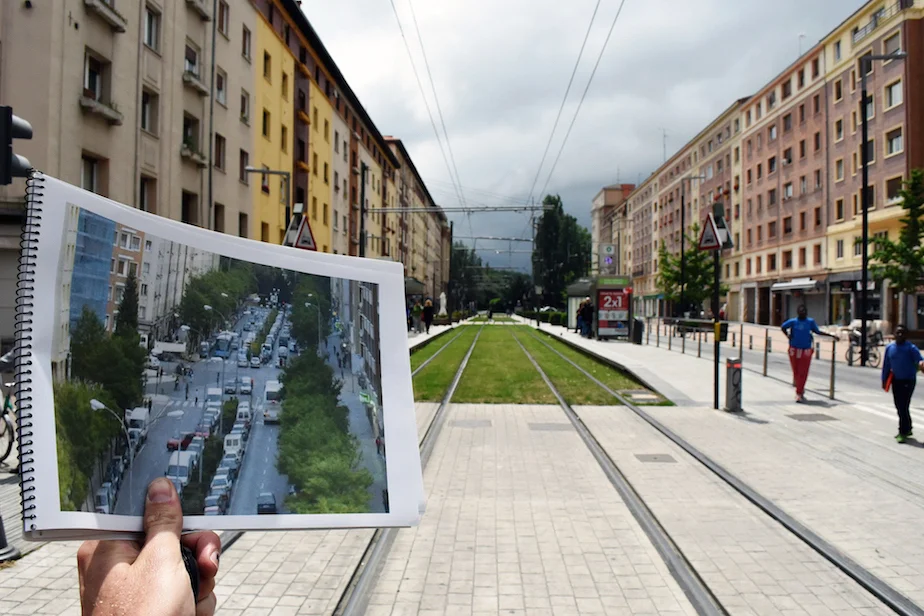
Even as its population soars, Vitoria today is probably more beautiful and vibrant than ever. As I stood with my bike on wide, green boulevards, outside bustling cafes I was shown photographs of the same city streets just a few years earlier – they were almost beyond recognition.

Where cars were parked up on sidewalks, gardens beds now thrive. Where trucks and buses queued for hours in peak hour traffic, people walk and chat in a green corridor, which takes trams into and out of the city centre.

With so many people moving through, and spending time in public spaces, the city has a healthy, social vibe, which simply doesn’t exist where the urban grain has been dissected by busy car thoroughfares. I couldn’t help to imagine what larger cities like London, New York, Sydney and Singapore could become.

In just the past five years, the length of bikeways has increased to 135 kilometres. Unlike London’s lycra-covered, middle-aged men racing each other to the office, bicycle infrastructure means that riding a bike is safe for everyone – of all ages. Segregated bike paths have made Vitoria more inclusive for everyone.

The changes however, have not just been about updating the city’s infrastructure. Creative ways of communicating and educating have been crucial to Vitoria’s success.

Heiko Balsmeyer from VCD told me how the city worked to get local politicians on board so that consensus on important decisions could be reached. It was a process of open communication about the widespread benefits of new ideas. With this knowledge instilled, it would have been simply ignorant for councillors to object to projects that would have obvious, citywide benefits.

Inspired by the UK’s Bikeability Programme, programmes are now being implemented into school curriculums where children are taught to ride safely to school. The hope is that kids will no longer need their parent’s assistance to get about the city.

The range of progressive measures in place to support positive change goes on: the city has overhauled parking policies, updated its branding strategy, and helps support progressive local community groups. Many of these measures have been taken from overseas and adapted into the local context.

Vitoria’s clear success has been in clever imitation. As we embark on a new urban era, it’s about time that cities transfer knowledge, communicate, and work with one-another to overcome what are both local, and global, challenges.

Malaga: why cities should invest in culture /  by Tom Oliver Payne

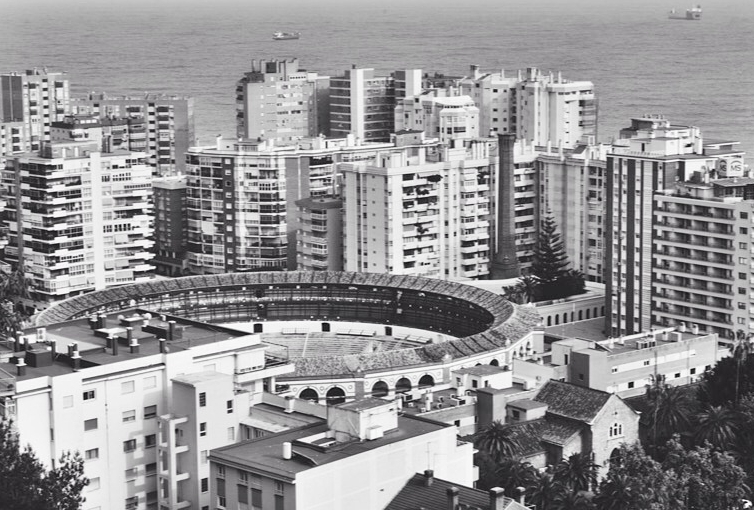
A couple of weeks ago, a bunch of my friends and I decided we would explore Malaga in Spain. Not only is there is some cool stuff within and around the city that is great to ride on bikes, but the city is now home to one of the world's greatest skateparks designed by the legendary Rueben Alcantara.

Back in the 90s and 2000s, Ruebenwas one of the world's most well-known bmx riders -  known for his unique style and ability to create interesting new tricks. Although he exploded in popularity in the United States, his home was always Malaga. Today Rueben has moved back to this city and although he still shows up most professional bmx riders today, he isn't quite the bmx-celebrity he once was.

Upon his return however, the city of Malaga has benefited from investing in Rueben's talent, knowledge and global popularity.

In the 18th century, Malaga was the second most important industrial centre in Spain. Today, converted into a world capital of tourism, thanks to the development of the Costa del Sol and its privileged climate and strategic location, Málaga continues to grow. However, with the recent recession having taken its toll on tourism, the city is also redefining itself in knowledge-based sectors and the arts.

Initially just allowing Rueben to design the bowl, the local authority/investor allowed Rueben to slowly take much of the control of the creation and management of the entire park.

Today, it is a fully flung skate and bmx centre named quite appropriately Malaga Skatepark Rueben Alcantara and it now attracts some of the most well-respected bmx riders and skateboarders from around the world... Just on our trip we met bus loads of riders from across Europe, the States and Australia.

Who knows what energy this will spark in the local neighbourhood? Who knows what attention in will bring from across the global community? How many more Rueben's will this park help to create?

Creative ideas, people and trends can completely transform local economies and even improve social cohesion within a community. Helping the arts and new ideas to prosper can - arguably, of course - have an even greater impact on government policies and other top-down community-building programmes.

Local governments often seek out consultants to guide them on what's best for local economies or place making. Here's another idea: see what already exists and help it to thrive.Perhaps the best way for local governments to stimulate neighbourhoods is by seeking out local talent and helping it to grow - much the same as a good business does with its employees.

Each neighbourhood comprises a unique history and has a diverse range of local residents. These people have talents, skills, ideas and perspectives. By allowing them to thrive in their community, the community will also thrive as a result.

I'm strong believer in individual creativity and ambition. When this is met with support and funding with the institutions and organisation who have it, great things can happen. Sometimes it just takes a little bit of risk-taking.

Bicycle revolution or urban fad? /  by Tom Oliver Payne

Cities across the world are seeing a dramatic increase in cycling. Is this a short lived fad, or are we witnessing the start of a revolution in urban transport?

The rise of the car in the 50s and 60s completely transformed cities – first across the USA, and then the world. Once centred around walkable shopping districts and train lines, cities began to spread into vast suburbs and homogenous landscapes.

Cars didn’t only change our cities, but they also changed our way of thinking. The car became a symbol of freedom, a symbol of maturity and a form of identity in the western world.

Today, we are seeing cities across the globe turn to alternative forms of mobility, and trains, trams and buses are back on the planning agenda in a big way. 60 years ago, one of the world’s most extensive tram networks (180 miles) was destroyed in Sydney, Australia, to make way for the private car. Today, the city is once again investing billions into a new light rail system that it hopes will relieve some of the city’s severe congestion.

We’re also seeing (re) investment into bicycle infrastructure in downtown districts across the globe. Over the last few years, cities like New York have constructed hundreds of miles of bike paths and bike share schemes are popping up in every corner of the globe – from Hangzhou’s ‘Public Bicycle’, to Paris’ Vélib’, to Montreal’s ‘Bixi’.

stklm-bike.jpg

Pedalling home from work in Stockholm.

Bikes are also having a renewed surge of popularity. Portland hipsters are taking to the streets on fixies, east Londoners are dusting off vintage Raleighs and Sydney corporates are swapping golf clubs for lycra… As a result, the growth in cycling numbers has been immense in many cities worldwide. Italy has recently recorded that bike sales have outstripped car sales for the first time since World War II; the number of commuter cyclists in new York has doubled over the last five years; and for the first time in decades, a London borough (Hackney) has recorded that more people cycle to work (15%) than drive (12%).

Is all of this a revolution, or is it simply an urban fad?

The ‘bike boom’ of the United States saw similar trends in the late 60s and early 70s. Between ‘63 and ‘73 bike sales increased from 2.5 to 15 million, companies such as Union Carbide installed bike racks for employees and more than 50 cities across the country began planning bike paths with funding from the federal government. While there are many assumptions about why the American ‘bike boom’ ended, it’s likely that it had something to do with the end of the fuel crisis and recession.

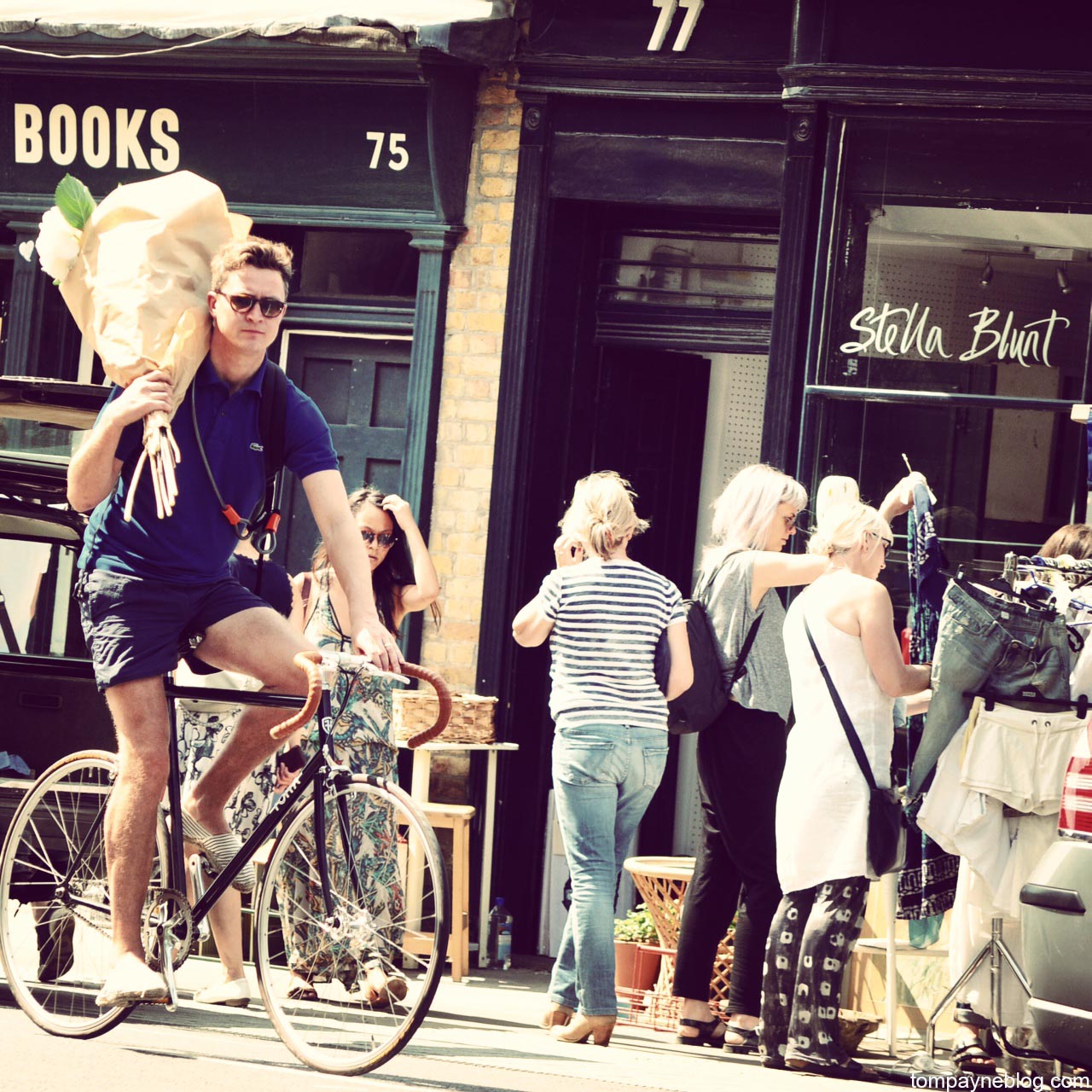
Sunday morning shopping in the London borough of Hackney. 

Sunday morning shopping in the London borough of Hackney. 

Unlike America in the 70s, today we really are beginning to realise that our growth is unsustainable. We’re aware that we can no longer keep producing without recycling, we can no longer all own large homes, and we can no longer all drive to work – not only do our cars not all fit in our cities, but we are also running out of the very resource that drives them. There are simply too many of us. And yes, some argue that in our highly urbanised world, we could spread our wings by repopulating and revitalising rural areas. But not only do we rely on the economies of scale of cities to compete in the globalised world, but the ‘green’ countryside is also very ‘brown’. Those living in spacious rural areas generally have far greater environmental impacts than those in cities. As a result, we’re seeing transit-oriented housing developments, a move towards cleaner energy sources, urban congestion taxes and rising fuel prices. These are all putting pressure on  drivers and making the move to two wheels seem slightly more practical.

Is the movement global? Not every city is adopting bike use in the same way, and some cities aren’t moving towards bikes at all. An array of factors will determine how, exactly, these changes are occurring. Some cities already have a deeply embedded bike culture (Copenhagen), some cities have stubborn politicians (Sydney), some cities are simply too hot (Phoenix), too cold (Ulan Bator) or too vast (Los Angeles). But across the globe we are beginning to witness a shift in the way we think about urban mobility.

The car will not simply disappear and bicycles will not suddenly take over our streets. But as we look for alternative solutions to our current transport woes, cycling is suddenly looking like a pretty smart option.

Rather than just a fad, I’d argue that today’s boom will be sticking about for a while. Just like the revolution of a wheel, we are perhaps, returning to where it all began.

INSTAGRAM


Meet Mikey from Shoreditch /  by Tom Oliver Payne

Sometimes when I'm walking home from work I decide to take the long route so that I can walk through a rad little tunnel in Shoreditch. There are usually interesting people cruising around and some good graffiti to look at. One night last week, the light was looking particularly good so I decided to grab a few photographs.

As I lay splayed out on the ground I noticed a busker at the other end of the tunnel absolutely smashing it on his acoustic. He may not have had all the technical ability, but he had some serious passion. As I looked through the viewfinder I noticed the dude get up out of his spot and begin walking towards me. As he got closer, I popped my head up over the camera and said hello. I was greeted with a massive smile and "Hey, I'm Mikey! Can I see your shots?"

Over the next hour or two Mikey and I sat playing guitar and watching the people power-walking home from work - much the way I would've looked just a couple of hours before. An interesting little demographic contrast... there sat Mikey: high vis jacket, a can of beer, the world's loudest laugh and a song. In front of us were clean suits, Iphones, tight faces, and busy agendas. This was a good reminder to take a step back every so often to get some perspective. When you realise the simplicity of life, you suddenly realise that the stupid worries are all just... well, worries.

Sometimes what seems to be a fulfilling life, is not that that fulfilling at all. On the other hand, someone who seemingly has nothing, couldn't ask for anything more. It's important to know what makes you happy, and focus your attention on that. Anything else will just disappoint.

Sitting just around the corner from Gary and Prince, Mikey plays under Shoreditch Overground most week nights. Listen to his music, drop him a coin and say hello.

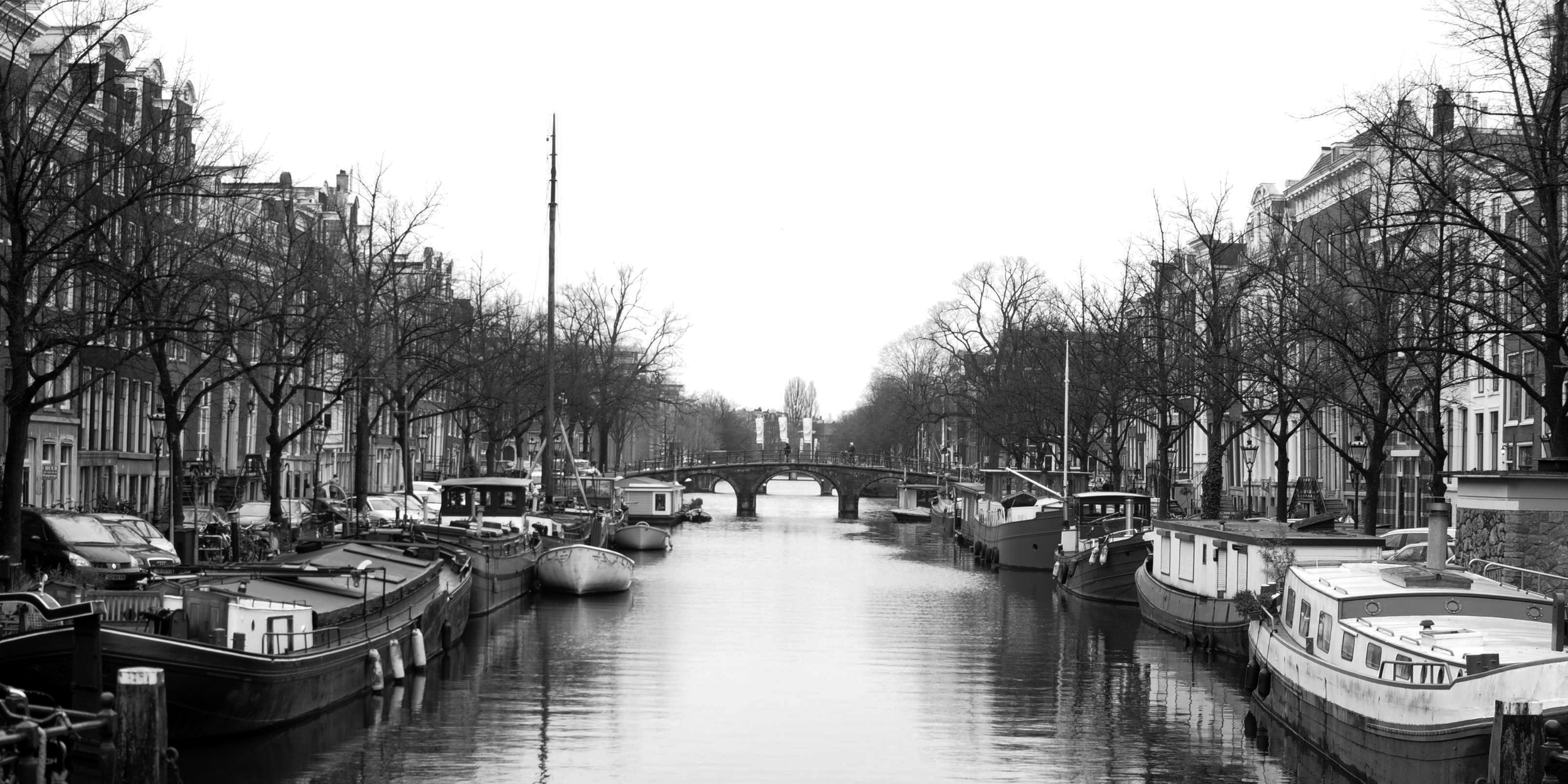
3 observations from Amsterdam /  by Tom Oliver Payne

I hadn’t been to Amsterdam for a few years, so I was pretty excited to head back there last week.

You can learn a lot about a place just by observing it. Café culture, nightlife and architecture are all indications of what a city is like. Even subtler than that is what people wear, how they travel and converse. People-watching – in my opinion - is a far better way to understand a city than reading a book or heading out on a bus tour. After a few days of cruising around the city by foot and bike, I made a couple of observations below.

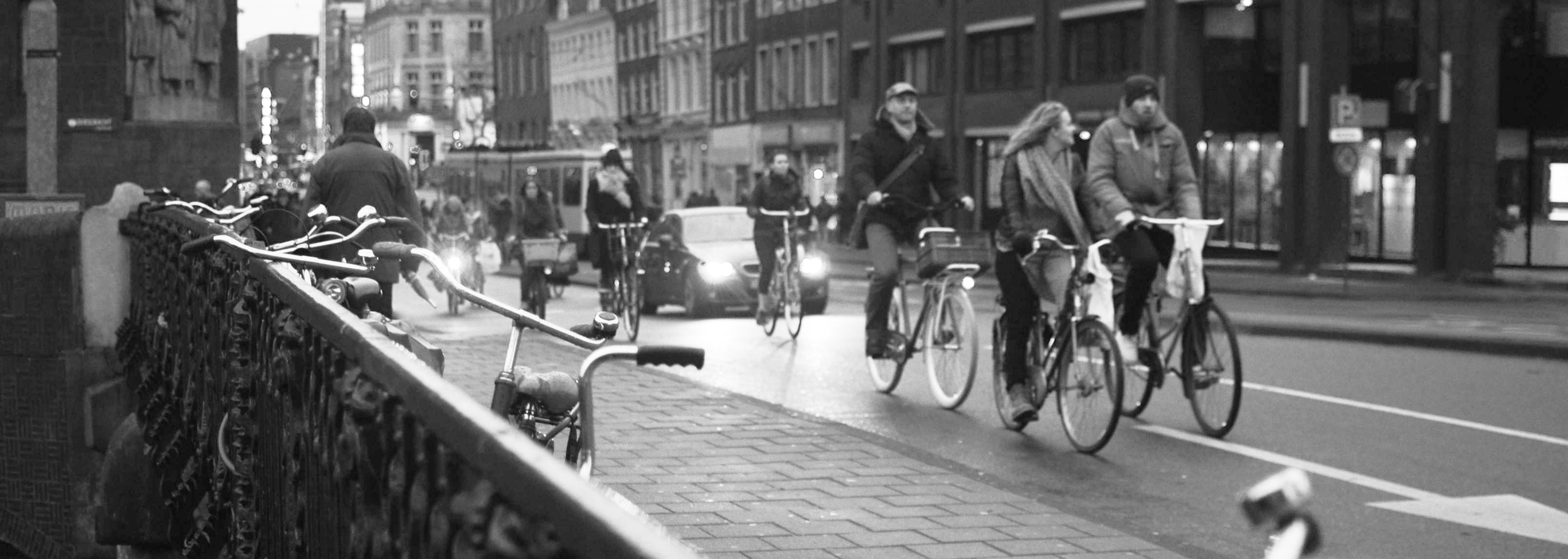
1. bikes are still loved in winter

Amsterdam is a bicycle city – just about everyone knows that. Coming from the hot and sweaty landmass on the other side on the other side of the world, I’ve always wondered how Amsterdam’s cold winter temperatures and minimal daylight hours impact upon people’s desire to ride. In short, this seems to have very little effect.

Early morning before the sun is up and the air is ice cold, bike paths into the city centre are packed with bikes. While the weather may sound a little grim, people aren't deterred at all. Actually, it would be interesting to understand the happiness levels of car drivers, public transport users and bikes riders in winter in Amsterdam. I’m certain those on bikes would be far happier than the rest. As in any city, people on bikes can have random conversations, stop in and out of shops en-route and observe early morning street life. Driving a car simply doesn't give you the joy that riding a bike does.

Over and over I've been told that cities should not – or can not – adopt Dutch cycling culture because of weather and climate. Unless you're talking these temperatures, that's a load of rubbish. I’ve heard this argument in cities with far milder temperatures than Amsterdam, and with far less rain too. When you have the right infrastructure and a culture supportive of bikes, cycling works in all times of the year.

2. Too much of one type of tourism is damaging the city centre

I know this is a pretty bold statement and is based on observation only. But the city centre is absolutely packed to the brim with 'Euro-trip' Australians, English hen parties and stoned Americans. Not that I have a problem with any of this in principle, but when a beautiful historic city centre is inundated with drug and party tourism culture, it begins to look and feel a little naf. Rather than a liberal city that is accepting of liberal attitudes, a large part of its economy looks to be solely reliant on a single type of tourism. As a result it feels like the city is developing around its tourism narrative rather than evolving as an actual place. This isn't good for locals or the future of the tourism industry.

The liberal Dutch attitude is a wonderful thing. The problem however, is that other countries are not so liberal. As a result, Amsterdam city centre has become a mecca for 'lads on tour’. Tacky neon signs hanging from beautiful brick work, café signs reading “American steaks” and an abundance of English football jerseys are just a few telling signs that the city centre is in stress.

Now, I know that the internationalisation of urban centres is well-discussed problem in the age of globalised economies and broken-down borders, but I’d argue that city’s like Amsterdam need to understand how its tourism economy can be essentially self-destructing. It's becoming increasingly obvious that the commercialisation of places and products actually leads retail centres to become far less competitive in a world where distinctiveness is increasingly vital to attract and maintain a healthy tourism trade. As place branding and marketing has grown in importance, urban markets in London for example, are quickly trying to rediscover what made them unique in the first place.

Perhaps its time for Amsterdam to recognise and enhance what makes the city a great place for locals. This will naturally translate into a strength for tourism.

3. People are amazing

The best part about going to a new city is meeting new people, and generally when you step put into a new place you get a vibe straight away. Are people smiley, polite, and do they have a warm aura? Although I'd been to Amsterdam before, I was immediately overwhelmed with how amazing people were. There is so much warmth and love in that city - it's incredible.... Maybe it's just a Dutch thing!

How well do you know Amsterdam? Any thoughts on these observations?

Photos by Tom Oliver Payne.