
This Place, Before looks at Parramatta Road at a moment of change. Once a major commercial spine, much of the road now sits in decline, yet its buildings still hold the layers of history that shaped it. Through direct, façade-focused photographs, the series makes these layers visible, revealing the road’s underlying DNA and offering a clearer sense of the place we have today, and the one that is about to emerge.
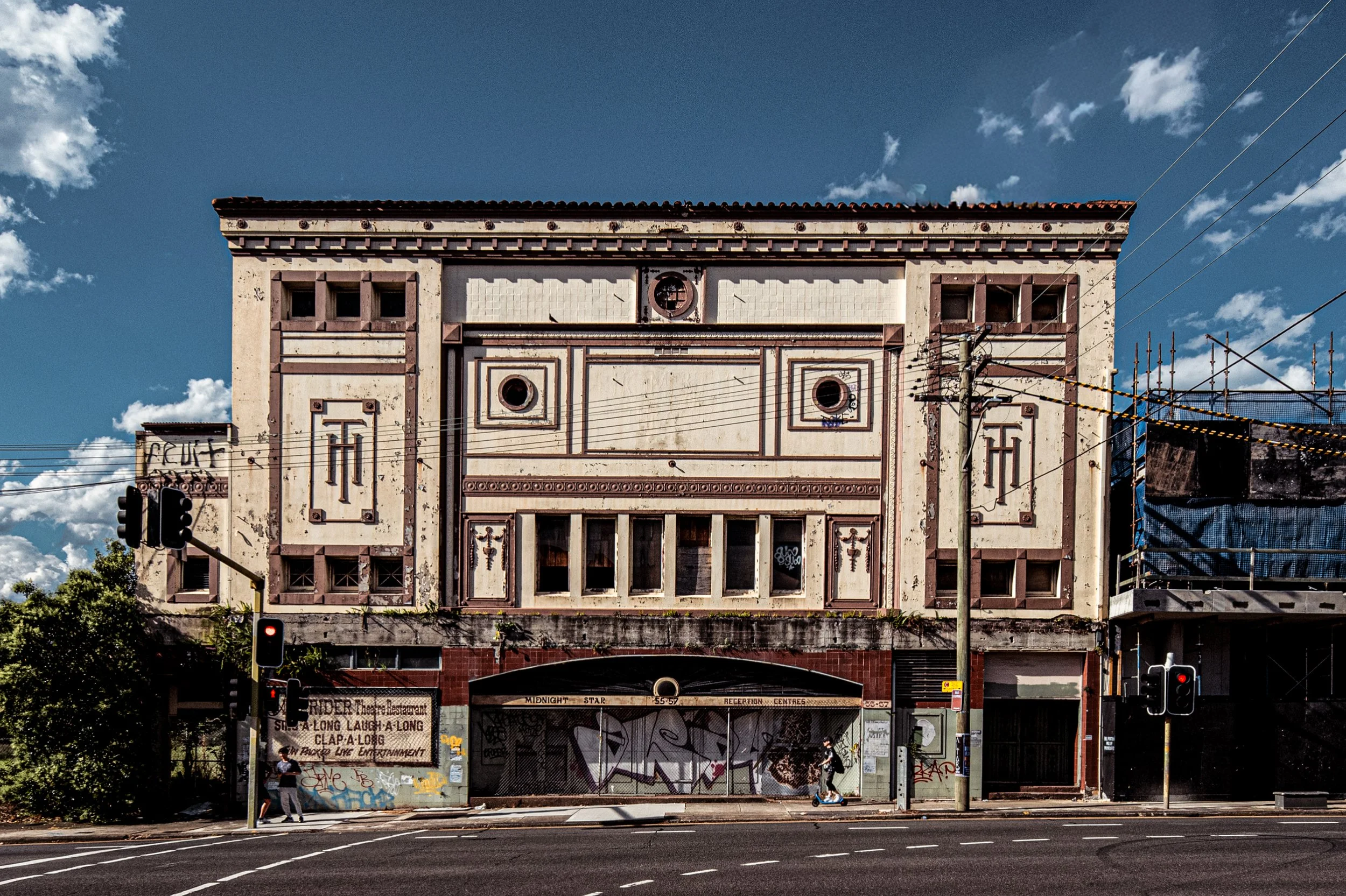
Midnight Star, 55–57 Parramatta Road, Homebush
Built in 1925 as the Homebush Theatre by architect Charles Boringer, this Interwar cinema was part of the suburban picture-palace network that once lined Parramatta Road. Its facade carries the
'HT' monogram, a distinctive feature Boringer also used at the Rozelle Theatre ('RT'). After films stopped in 1959, the building became an ice rink, theatre restaurant, reception venue and briefly a community social centre. It now stands vacant, one of the clearest surviving pieces of the road's early entertainment era.
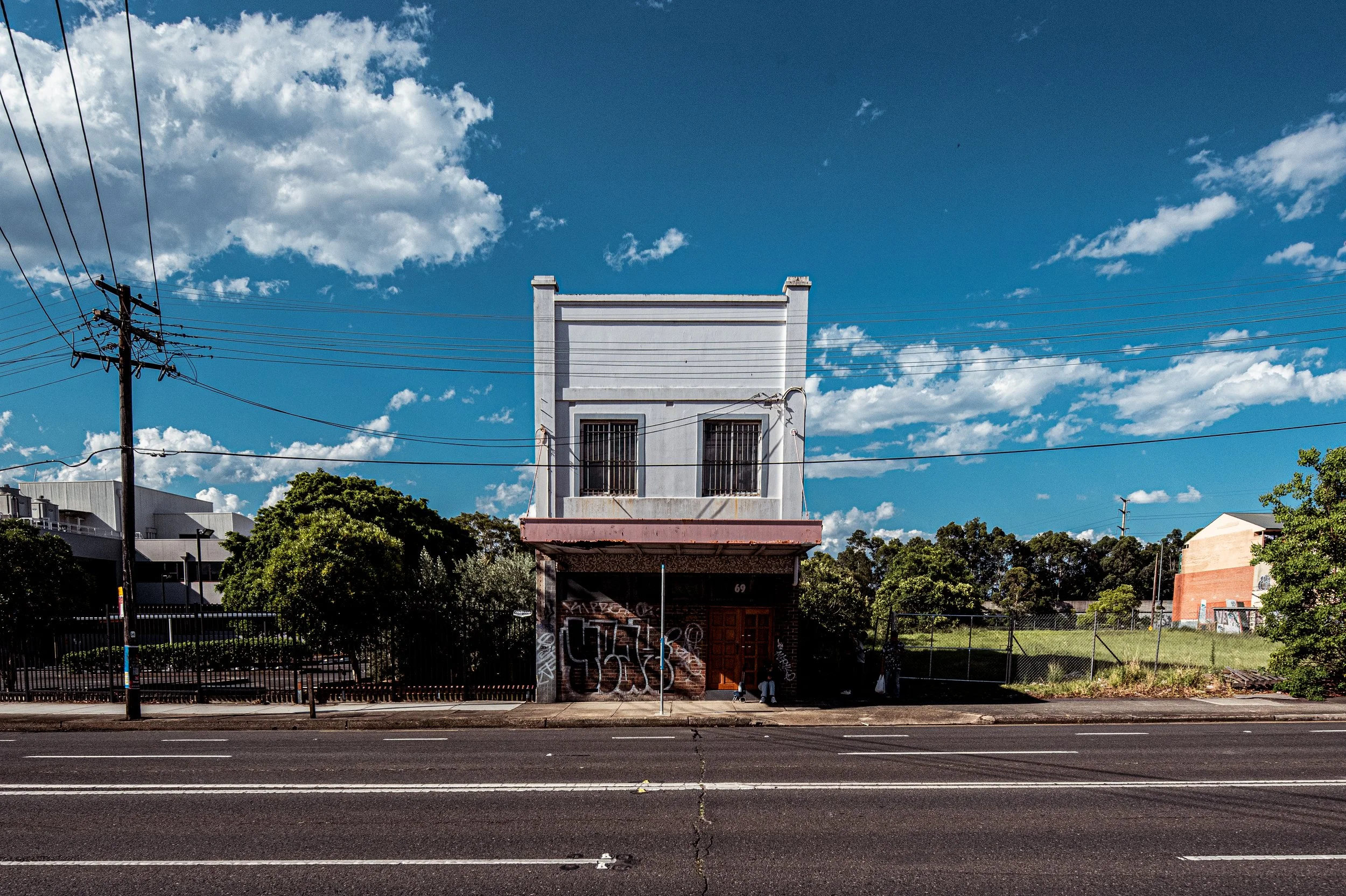
69 Parramatta Road, Homebush
A modest mid-century shop-house, built when Parramatta Road was dominated by small businesses and service trades. It now sits on land earmarked for higher-density, but the building remains unchanged. Its form reflects the earlier commercial strip, even as the surrounding area prepares for redevelopment.
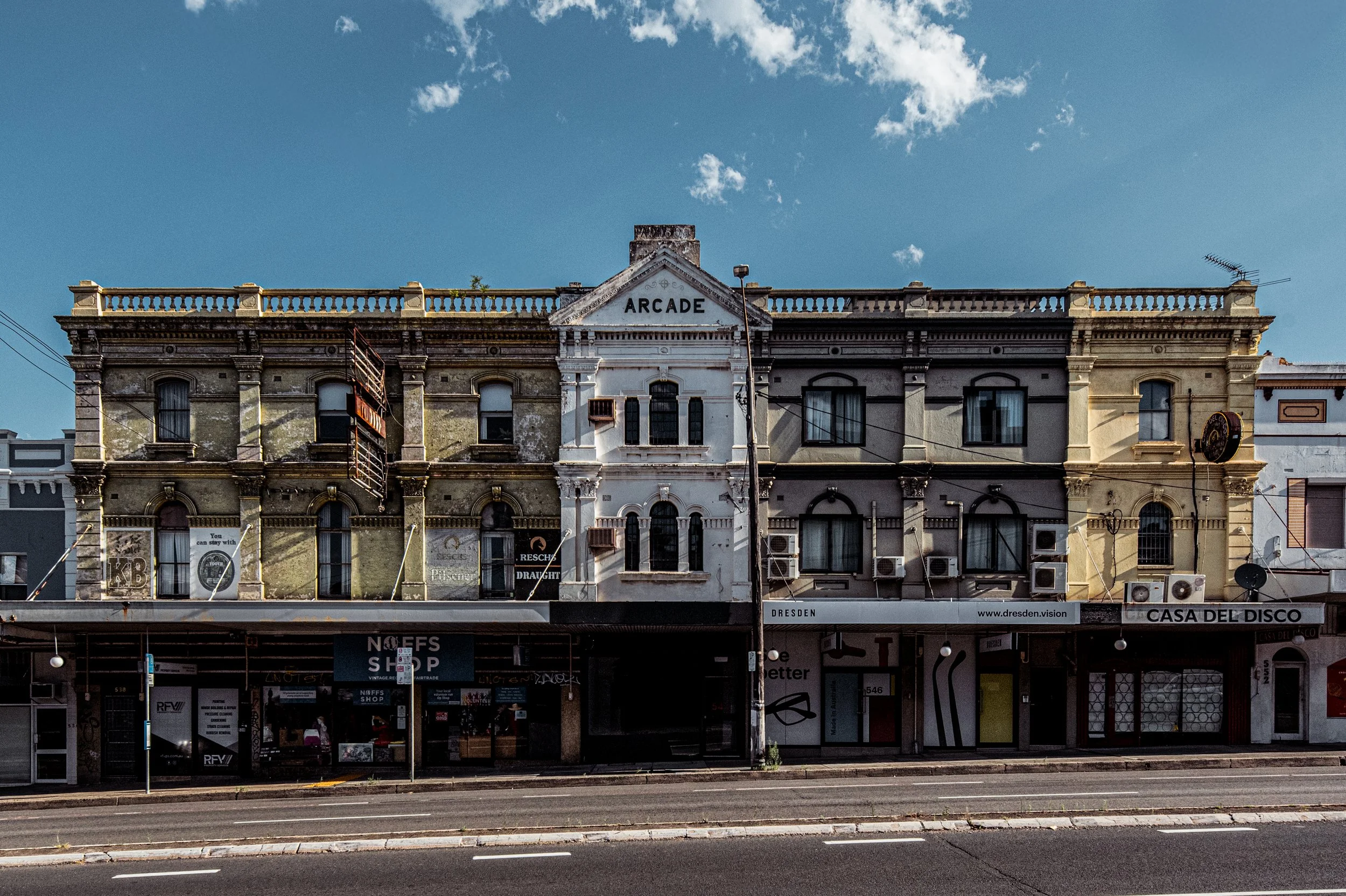
538–550 Parramatta Road, Taverners Hill
A Victorian two-storey shop-top row with a central 'Arcade' roof feature, classical detailing and narrow retail frontages. Faded KB Lager, Tooth's and Reschs beer signs add a mid-20th-century layer, showing how these older buildings were used by pubs, bottle shops and small retail businesses.
Together, the architecture and signage reveal how the Parramatta Road corridor has evolved across generations.
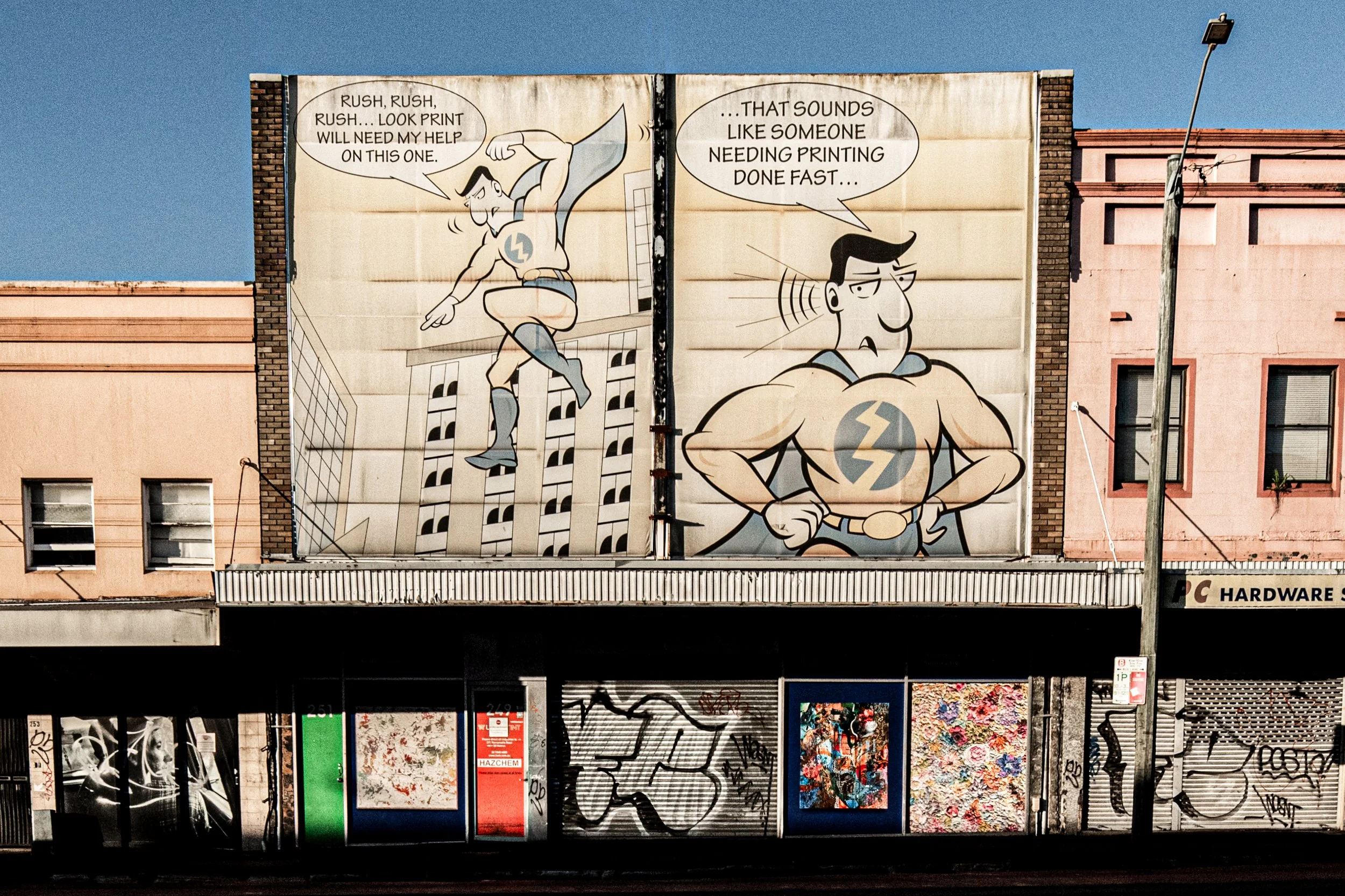
249-251 Parramatta Road, Annandale
The large comic-style mural was added by Look Group, a signage and print business. Behind it is an early 20th-century shop-house, aligned in height and proportion with the Victorian and Federation buildings beside it. The façade has been reclad several times, showing how older structures along Parramatta Road were continually altered to suit new uses.
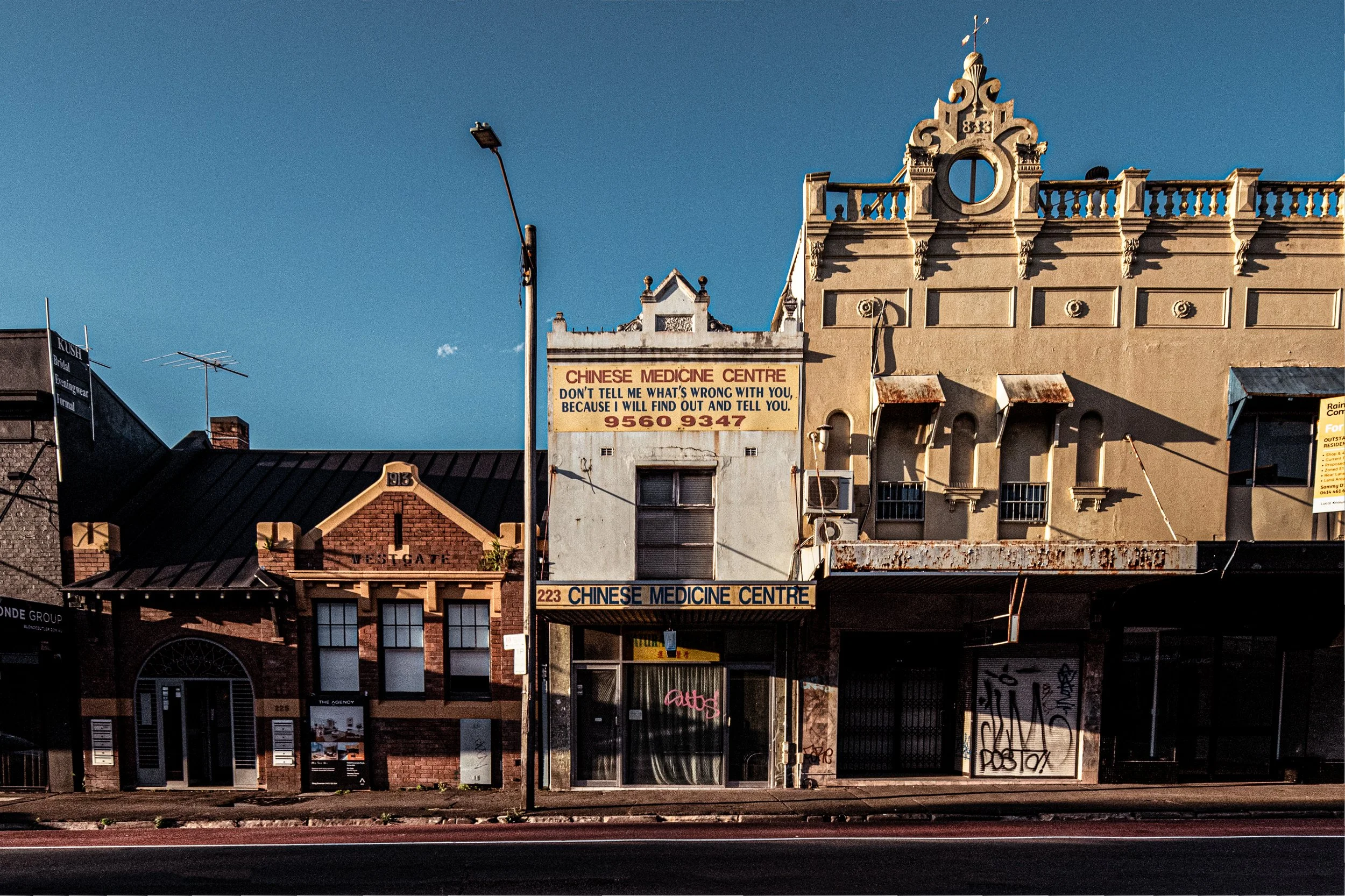
223-219 Parramatta Road, Leichhardt
This group shows three eras of the road's development. At 221-223 is an early 20th-century shop-house, known for its hand-painted Chinese Medicine Centre sign. Beside it, 219 Parramatta Road is a late-19th-century building with an ornate parapet, urns and the original street number '833'. On the left, the former Westgate substation represents early 1900s government infrastructure. Together they illustrate the mix of forms that characterise the corridor.
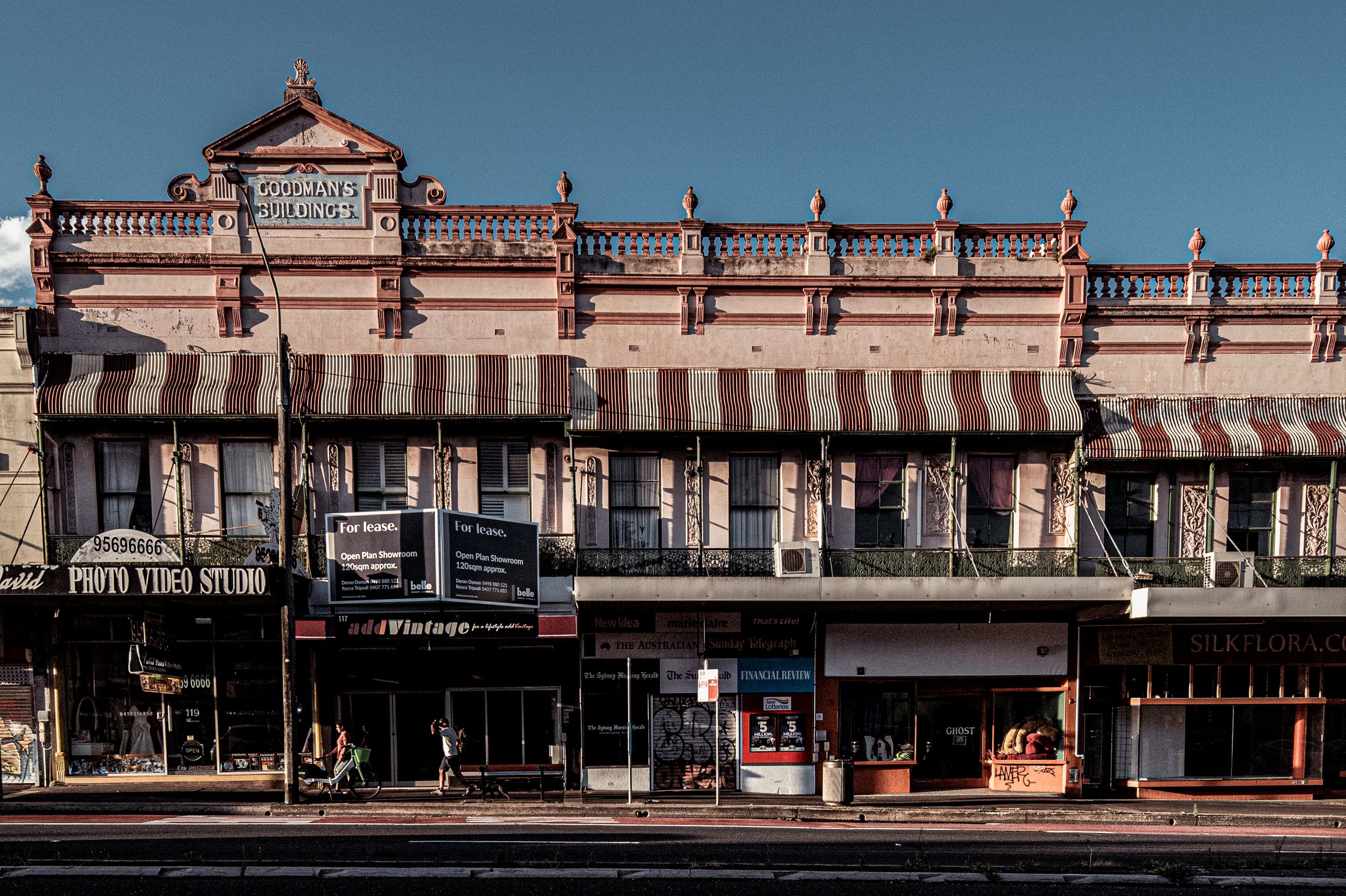
105–119 Parramatta Road, Annandale
A large Victorian/Edwardian commercial terrace built in stages between 1890 and 1912 for Walter Goodman and designed by Joseph Sheerin of Sheerin & Hennessy. The terrace originally had ground-floor shops with residences above, including Goodman's large first-floor apartment. Although the awnings and shopfronts have changed, the balustraded parapet, decorative pediment and stucco detailing remain important architectural features.
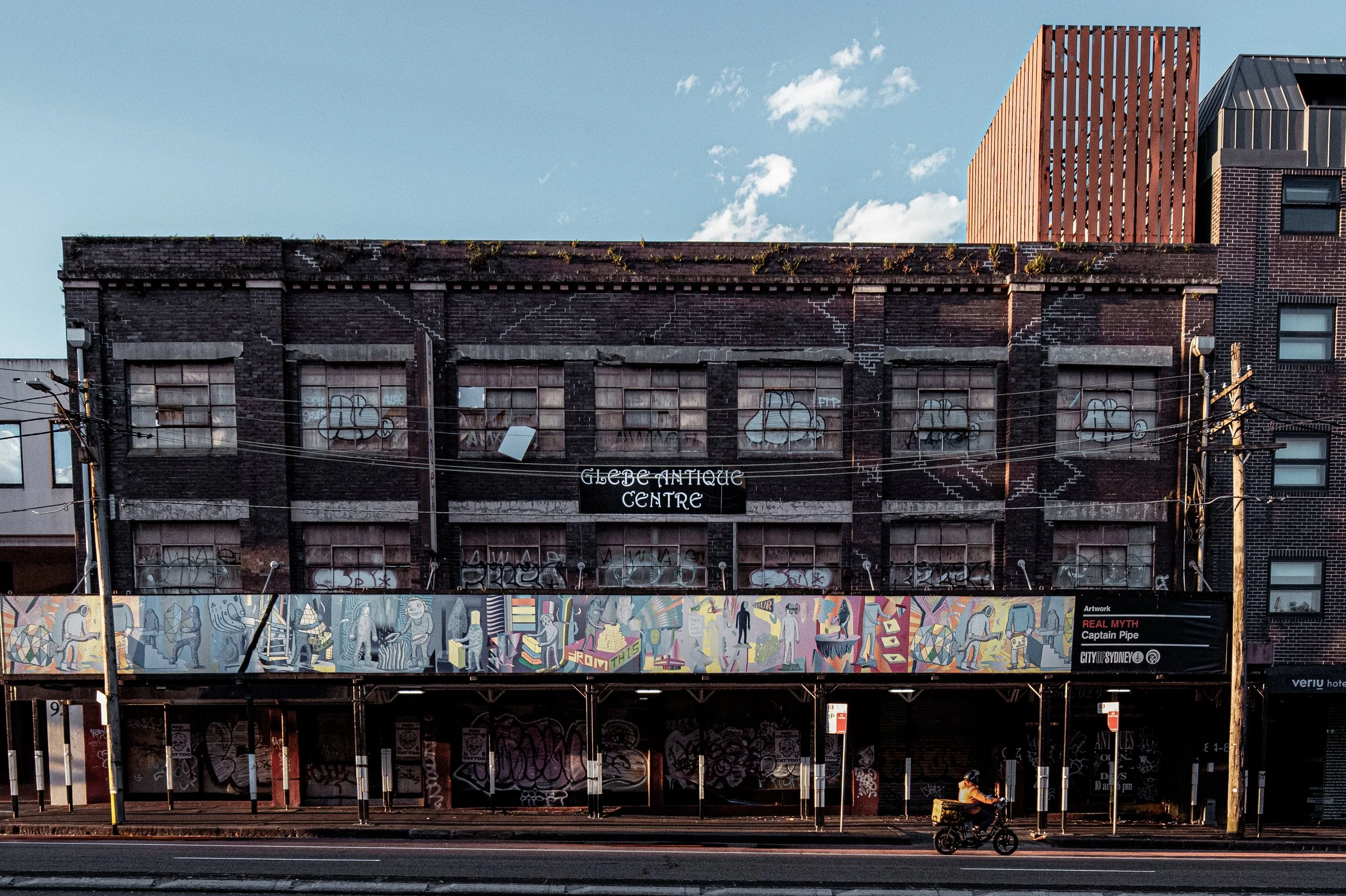
92 Parramatta Road, Camperdown
A 1920s-30s industrial warehouse with dark brickwork and steel-framed factory windows typical of the interwar industrial belt through Camperdown and Annandale. Before becoming the Glebe Antique Centre, it likely housed automotive or wholesale storage. The boarded windows and art on the hoarding mark its most recent chapter as the area continues to transition away from its industrial past.