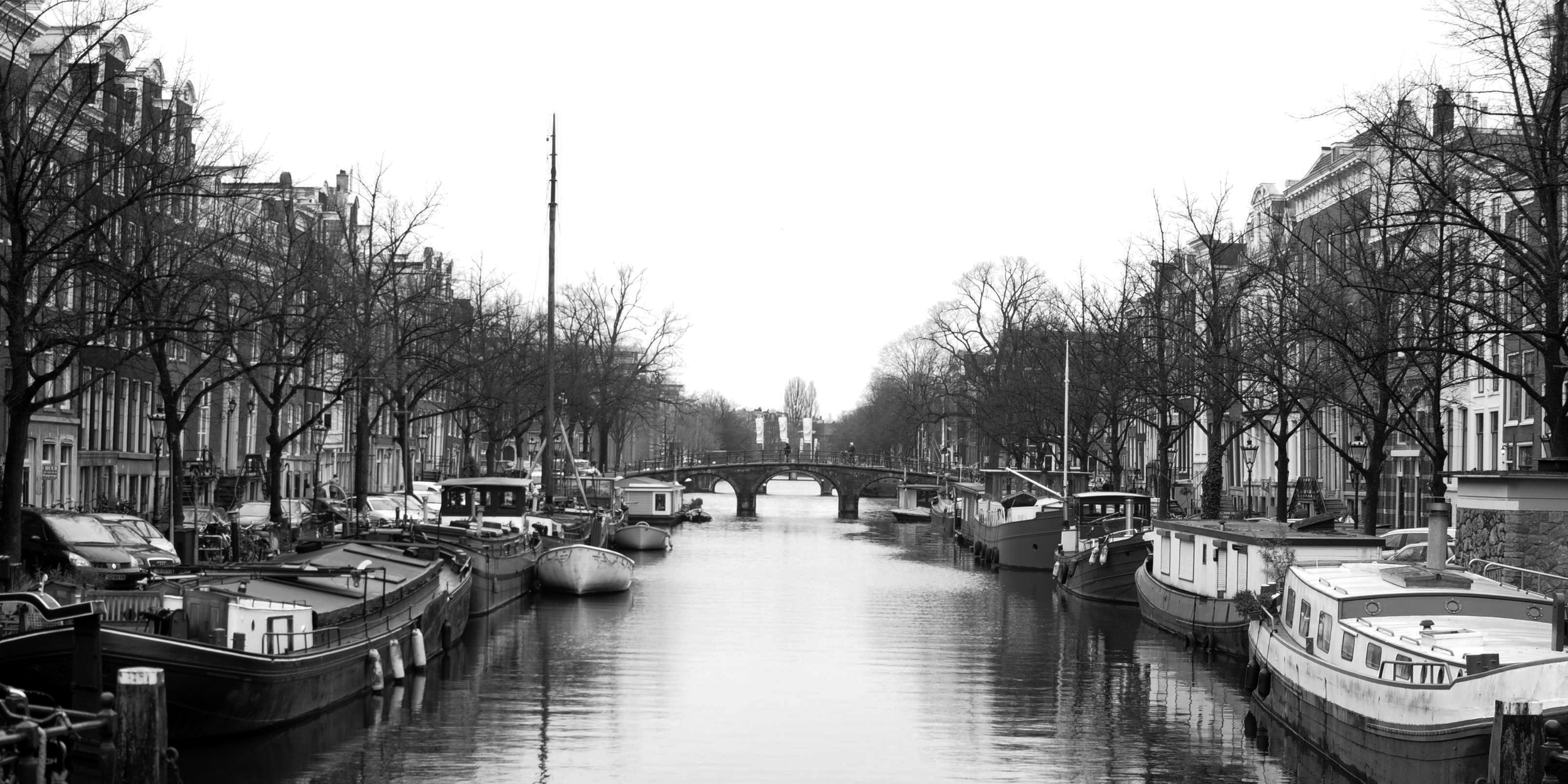
3 observations from Amsterdam by Tom Oliver Payne

I hadn’t been to Amsterdam for a few years, so I was pretty excited to head back there last week.

You can learn a lot about a place just by observing it. Café culture, nightlife and architecture are all indications of what a city is like. Even subtler than that is what people wear, how they travel and converse. People-watching – in my opinion - is a far better way to understand a city than reading a book or heading out on a bus tour. After a few days of cruising around the city by foot and bike, I made a couple of observations below.

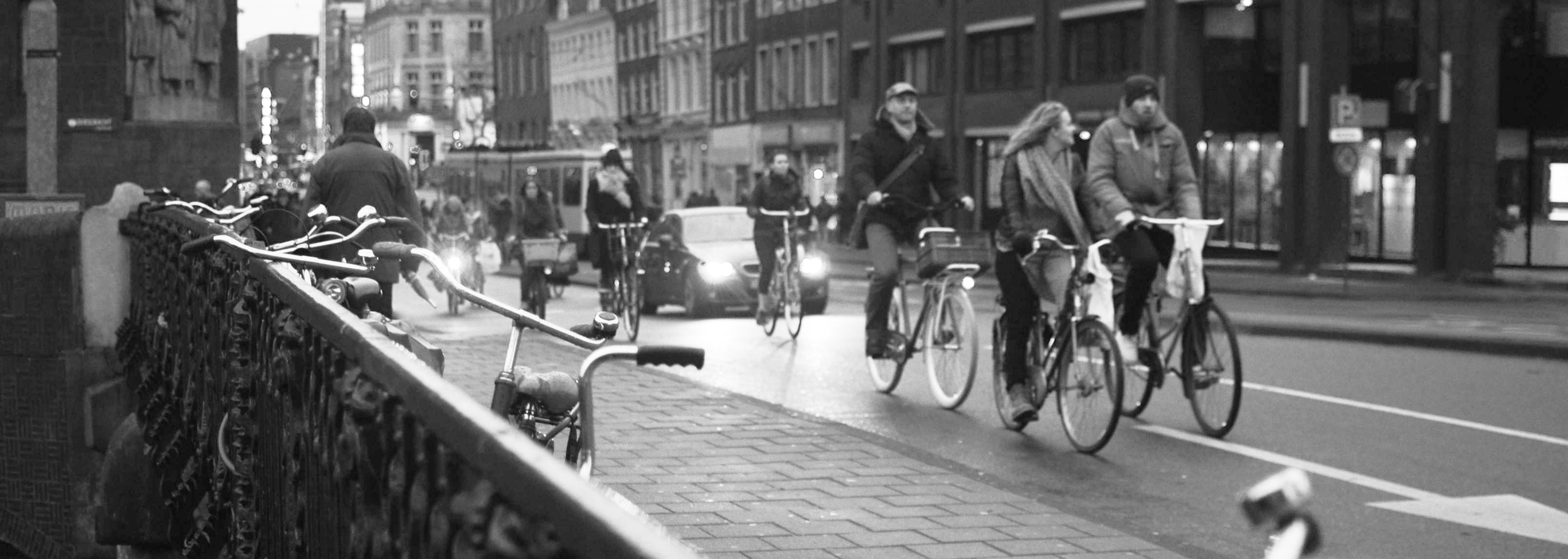
1. bikes are still loved in winter

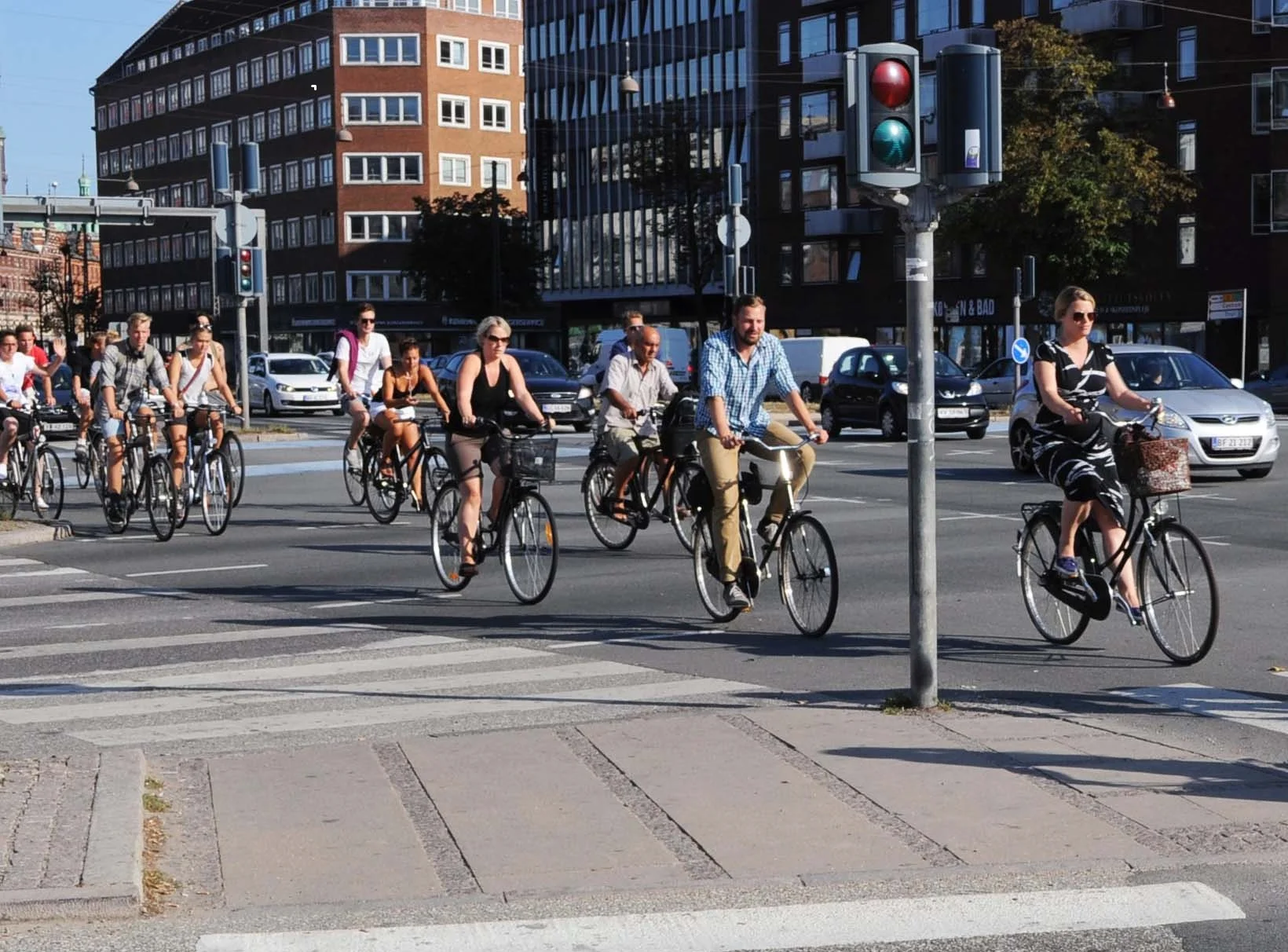
Amsterdam is a bicycle city – just about everyone knows that. Coming from the hot and sweaty landmass on the other side on the other side of the world, I’ve always wondered how Amsterdam’s cold winter temperatures and minimal daylight hours impact upon people’s desire to ride. In short, this seems to have very little effect.

Early morning before the sun is up and the air is ice cold, bike paths into the city centre are packed with bikes. While the weather may sound a little grim, people aren't deterred at all. Actually, it would be interesting to understand the happiness levels of car drivers, public transport users and bikes riders in winter in Amsterdam. I’m certain those on bikes would be far happier than the rest. As in any city, people on bikes can have random conversations, stop in and out of shops en-route and observe early morning street life. Driving a car simply doesn't give you the joy that riding a bike does.

Over and over I've been told that cities should not – or can not – adopt Dutch cycling culture because of weather and climate. Unless you're talking these temperatures, that's a load of rubbish. I’ve heard this argument in cities with far milder temperatures than Amsterdam, and with far less rain too. When you have the right infrastructure and a culture supportive of bikes, cycling works in all times of the year.

2. Too much of one type of tourism is damaging the city centre

I know this is a pretty bold statement and is based on observation only. But the city centre is absolutely packed to the brim with 'Euro-trip' Australians, English hen parties and stoned Americans. Not that I have a problem with any of this in principle, but when a beautiful historic city centre is inundated with drug and party tourism culture, it begins to look and feel a little naf. Rather than a liberal city that is accepting of liberal attitudes, a large part of its economy looks to be solely reliant on a single type of tourism. As a result it feels like the city is developing around its tourism narrative rather than evolving as an actual place. This isn't good for locals or the future of the tourism industry.
The liberal Dutch attitude is a wonderful thing. The problem however, is that other countries are not so liberal. As a result, Amsterdam city centre has become a mecca for 'lads on tour’. Tacky neon signs hanging from beautiful brick work, café signs reading “American steaks” and an abundance of English football jerseys are just a few telling signs that the city centre is in stress.

Now, I know that the internationalisation of urban centres is well-discussed problem in the age of globalised economies and broken-down borders, but I’d argue that city’s like Amsterdam need to understand how its tourism economy can be essentially self-destructing. It's becoming increasingly obvious that the commercialisation of places and products actually leads retail centres to become far less competitive in a world where distinctiveness is increasingly vital to attract and maintain a healthy tourism trade. As place branding and marketing has grown in importance, urban markets in London for example, are quickly trying to rediscover what made them unique in the first place.

Perhaps its time for Amsterdam to recognise and enhance what makes the city a great place for locals. This will naturally translate into a strength for tourism.

3. People are amazing

The best part about going to a new city is meeting new people, and generally when you step put into a new place you get a vibe straight away. Are people smiley, polite, and do they have a warm aura? Although I'd been to Amsterdam before, I was immediately overwhelmed with how amazing people were. There is so much warmth and love in that city - it's incredible.... Maybe it's just a Dutch thing!

How well do you know Amsterdam? Any thoughts on these observations?

Photos by Tom Oliver Payne. 

The world is going two-wheeled: what's stopping Sydney? by Tom Oliver Payne

6682735743_8aa77d5d80_o1.jpg

Sydney’s transportation network is in crisis. Decades of dependence on the car have left the roads congested, the air polluted and residents - well – fat. Furthermore, with the city’s cheaper housing stretching out into its vast western suburbs, expensive and lengthy commutes have perpetuated the growing divide between the rich and poor. But we all know that cars in cities really are a thing of the past. Over the past couple of decades there has been mounting evidence that building more roads does not alleviate congestion and traffic within urban areas.

On top of research, dependence on the personal automobile is something that millenials no longer value or desire. Unlike American films of the 1970s, young people don’t want a car for their 18th birthday. In fact, an American study has found that driving by young people decreased by 23 per cent between 2001 and 2009. Today, people want to live in walkable neighbourhoods, close to places of work, education and friends. And surely, no one wants to be the designated driver.

Driving a car simply doesn’t offer a person in the city the freedom that your own two feet or a bicycle does.

For a long time, I dreamed that Sydney would embrace a cycling culture modelled on the success of Copenhagen. Copenhagen’s street design allows children to bike around cruise safely and freely, and encourages spontaneous social interaction during the daily commute.

Unfortunately, I began to give up on that dream sometime in my early 20s. I’m not sure if it was the time I was doored by a taxi on Oxford Street, the time I was thrown to the ground by a cop for riding on the pavement, or the time a guy in an SUV tried to ‘intimidate’ me by actually drive right into me. Or perhaps, it was one of the many other times that I feared for my life because a car driver didn’t see me.

After years of abuse on the roads, it’s become hard to imagine that things will ever change.

While the problems faced by bike riders may seem commonplace in many cities across the world, other cities are changing very quickly. And Sydney is not keeping up.

In many cities, we are seeing an urban transition. New York, LA, London, Paris and Mexico City, to name just a few, are all investing heavily into bicycle infrastructure, lowering speed limits and planning new transit networks. Even China is realising the transformational effects biking and cycling infrastructure can play. Hangzhou recently opened the world’s largest bike share network with over 60,000 bikes and almost 2,500 docking stations.

This is more than just a trend. By incorporating best practices in cycling infrastructure, cities across the world are seeing improved public health, a decrease in congestion and improvement to retail in high streets. Forward-thinking local governments realise this and start building segregated bike lanes and other cycling infrastructure – not more roads.

So, what's stopping Sydney?

In most conversation about bikes in Australian cities, you hear all sorts of strange arguments. ‘It’s too hot’, ‘too hilly’, ‘we aren’t dense like European cities’. In his book, Cycling Space, Tasmanian-based architect and academic Steven Fleming has shown us how ridiculous these arguments really are. Cities with some of the most extreme temperatures or have built environments characterised by massive amounts of sprawl have far higher levels of cycling than Australian cities.

The major problem in Sydney is poor communication. More specifically, the problem with Sydney is the Daily Telegraph.

New York has recently invested in miles of bikes paths and a hugely successful bike share system. Yes, there has been a lot of debate about these changes in the media. But the debate has been relatively balanced and healthy in the media.

Unlike New York, Sydney doesn’t seem to enjoy a very healthy dialogue in mainstream media. Particularly when it comes to a conversation about bikes. It’s not a debate when the media is dominated by Rupert Murdoch.

For months on end, we’ve seen article after article in what is a blatant attack on pro-bike politicians, policies and journalists from the Daily Telegraph. And the problem with any democratic planning system is that poor communication easily leads to poor decision-making.

But it gets much more personal that that. The way in which cycling ‘accidents’ are portrayed in the paper is downright disgusting. Roads were built for bikes and people, not cars. Yet cars take the lives of dozens of riders every year. How dare the telegraph misrepresent cycling deaths by blaming improper safety equipment. Cyclists are vulnerable road users and cars are to blame.

Sydneysiders know what’s good for our city. We know that more roads are a not the solution. So why do we put up with it? The generation before us didn’t.

Sydney’s Green Bans of the 1960s and 70s were a struggle that helped to give people in Sydney the freedoms they have today. Glebe, Redfern, The Rocks and Centennial Park, would not be the beautiful places they are today if it weren’t for Jack Mundey and the BLF.

Throughout the 1970s thousands of people joined a movement to ensure that the physical nature of our city was protected, preserved and enhanced, not destroyed by oversized development and inner city motorways.

If we want to see a better Sydney, it’s time we collectively stood up to bad press and poor planning decision. Write news articles, share experiences, tell planners that you wish to ride your bike safely and freely. It’s time to take the development of our city out of the hands of Murdoch and into our own.

No, Sydney is not a European city. But now is the time to make it just that little bit more like one.

Feature image courtesy Amsterdamized.

I went to London's new Vans Skatepark tonight by Tom Oliver Payne

domus-00-house-of-vans.jpg

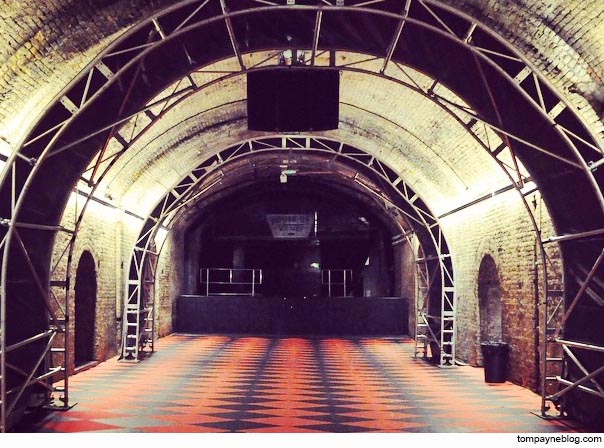
The Old Vic Tunnels underneath Waterloo Railway Station was - just a few years ago - nothing more than a few damp and derelict railway arches. In 2009 the space opened its doors as an arts and performance space and hosted dozens of amazing musicians, including the amazing Edward Sharpe and the Magnetic Zeros and saw the UK premiere of Banksy's Exit Through the Gift Shop.

After more than a year in disuse once again, the space reopened just a few weeks ago as House of Vans. Luckily enough, I was able to check out the new venue a few days after it opened. It's pretty amazing.

Nestled away in the Leake Street corner of the Station, the space comes complete with a street course, bowl section, a couple of bars, art space and music venue.

Once again, London has proved that innovative and creative thought to architecture and design can over come even the tightest physical limitations. When compared to the Vans parks spread across the United States, the London setup looks a little small. But through incredible layout technique, the creators of this venue have somehow managed to create what is a probably a far more interesting and active space than any large warehouse could offer. The coolest part is that it sits just a few metres underneath a a major railway line in the midst of one of the most amazing city centres in the world.

Perfect for an afternoon skate, Friday night party...or both. Check it out.

Feature image courtesy Domus. Images above by Tom Oliver Payne.

Are England's seaside arcades a thing of the past? by Tom Oliver Payne

Southsea. Photo courtesy Flickr/BMiz/CreativeCommons

Southsea. Photo courtesy Flickr/BMiz/CreativeCommons

Neon lights, sticky carpets and non-stop beeping sounds are engrained into the character and charm of English seaside towns. For decades, locals and tourists alike have flocked to the arcade to spend their spare change on games that would now be no match for even the most simple of iphone apps. Are amusement arcades a timeless piece of English culture, or are they nothing nothing more than outdated and tacky relics of the past?

Amusement arcades boomed throughout the 70s and early 80s when private computer games were non-existent and Space Invaders, Pac-Man and Frogger seemed to be ever-growing in popularity. As private computers and consoles launched onto the scene in the 90s, it's no wonder traditional arcades experienced a decline. Technology wasn't the only change to impact the arcade, anti-smoking and gambling laws were large scale societal changes which altered the way we utilise and perceive indoor entertainment space.

But despite all of this, the arcade has survived.

As I rode my bike through Norfolk at the weekend, the local towns were filled with arcades packed to brim of families holding ice-creams, reaching into their pockets for another round of Nascar. If arcades aren't the innovative places of entertainment they used to be, how do they exist?

Going to the seaside is something of a spectacle in the UK. But in one of the world's drizzliest countries, it's not always possible to sit on the beach all day. The arcade's iconic architecture, wide doorways and expansive internal layouts, depict the arcade's ability to offer leisure in what seems and feels to be a very public space.

While entertainment may come at an expense, much like a good cafe or pub, arcades offer an internal public setting to what is often a cold and drizzly outdoor world.

Sydney's Broadway is getting a facelift by Tom Oliver Payne

Courtesy Central Park Sydney. 

Courtesy Central Park Sydney. 

A bunch of interesting developments have come alive in Sydney's broadway region over the past few years.

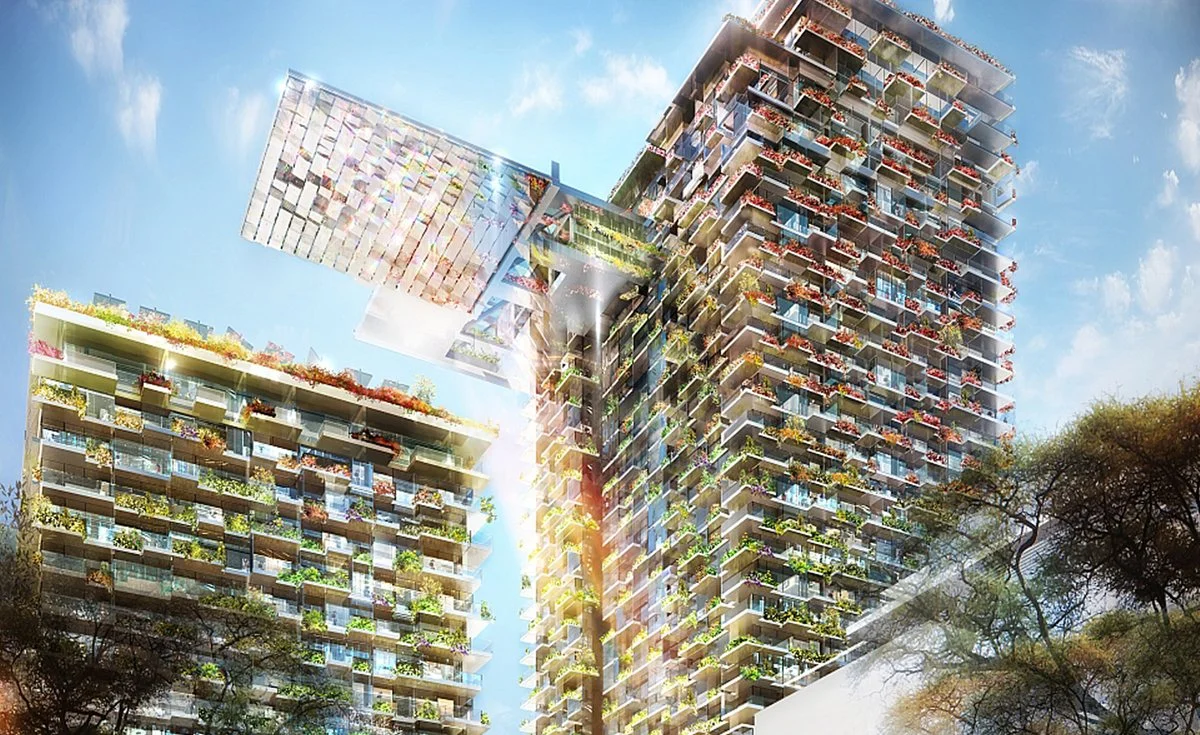
The scheme at Central Park has been well-received on both the local and international scale. The 235,000 sq m mixed use scheme has given the city a fascinating new addition to the skyline, has added some much needed public space and has set the bar with regard to environmental building standards. Designed by Jean Nouvel, One Central Park was ranked by Emporis as one of the world's best skyscrapers and ranked as Australia and Asia's best tall building by the Council for Tall Buildings and Urban Habitat.

The $1 billion UTS masterplan adjacent to Central Park promises a range of access routes and public space and of course, a host of new buildings throughout Ultimo - one of which has been designed by Frank Gehry. The Dr Chau Chak Wing Building, named after the Chinese-Australian business man and philanthropist, will accommodate 1,300 students and 400 academic staff in a unique tree house structure.

One Central Park. Image: greenroofsaustralasia

One Central Park. Image: greenroofsaustralasia

Both of these buildings provide an architectural quality that will be easily distinguishable from a city that still primarily comprises 1960s modernist towers. They also indicate something that's occurring at a much wider scale. With a new wave of tall building construction, Sydney is forming a distinct and interesting urban aesthetic. Hardly the destructive construction boom that the city experienced during the Green Ban years, these developments appear to be a respectful enhancement of the existing urban realm.

The Central Park and UTS schemes epitomise Australia in its modern context. As new environmental standards, strengthening connections with Asia and a desire for high density living increasingly influence the built environment, new buildings like these help to raise the standard in planning and architecture and positively represent a city to a global audience.

Why Copenhagen's trajectory is not 'negligible' by Tom Oliver Payne

mca15.jpg

Having just returned from my third trip to Copenhagen, I'm super impressed with the city. Not only is there an abundance of beautiful people, great coffee and delicious rye bread, but the city really does seem to be paving the way in urban sustainability.

On the flight home I read an interesting in an Easyjet magazine As Green as it Gets which questions some of Denmark's environmental advancements. In summary, author Michael Booth explains that while the city is incredibly green on paper, this is only 'negligible' due to a relatively small population size and the country's utilisation of huge amounts of coal. Booth also points out that while the intention is there to become sustainable, there are ongoing negative impacts and serious shortfalls, including 'greenwashing' and high energy costs.

While the article makes some interesting factual points, it fails to see the bigger picture. Yes, there are shortfalls in Copenhagen's (and Denmark's) progression to urban sustainability and a green economy, and yes there are ingoing negative implications of achieving positive environmental results. But none of this is 'negligible'.

When looking at Copenhagen's policy and planning decisions while taking into account the idea of path dependence, it is possible to appreciate a much broader and more positive picture.

Every positive action that the city of Copenhagen takes today has implications both nationally and internationally. While some reductions in C02 may seem negligible compared with ongoing coal use, these small advancements are all part of a much wider picture.

Every small improvement is setting a higher standard for the entire world. It's leading us on a more sustainable trajectory. Just as companies copy good ideas, cities copy cities. Look at the Copenhagen's ability to plan for bicycles for example - all of a sudden, the world wants to 'Copenhagenize'.

So, while Booth makes some interesting points, it's important to remember that often it's easier to criticise a set of processes than to see the bigger picture in a historical context.

Copenhagen's advancements in environmental technologies, architecture and planning are incredibly impressive. Of course there are shortfalls, but the evolution along current trajectories will only make the city more liveable and sustainable in the long-term. And it's through the evolution of these more sustainable trajectories that we're likely to find alternative solutions to some of the world's greatest problems, including the utilisation of coal energy.

Rather than nitpicking, perhaps cities across the world should be watching Copenhagen much more closely.

Photos by Tom Oliver Payne

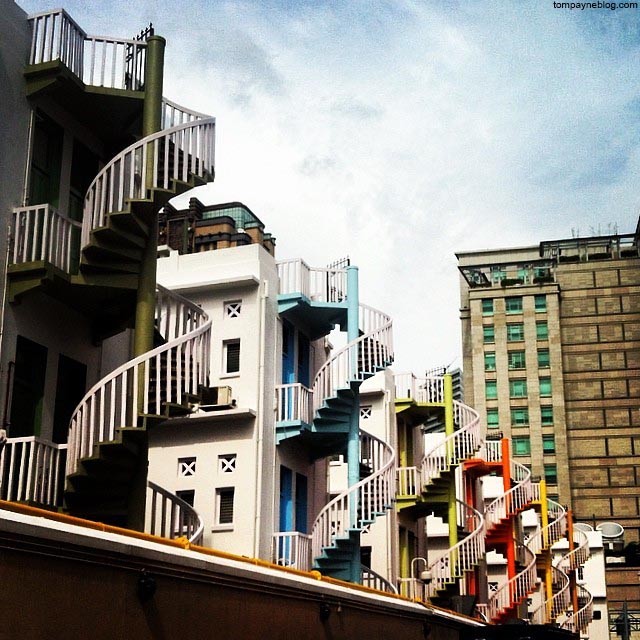
I wandered around Singapore. Here are my thoughts on the city. by Tom Oliver Payne

2014-06-15_1402825736.jpg

At my past job at a sustainability charity in London some of my friends who had lived in Singapore explained that it was highly ambitious environmentally, giving numerous examples of green business parks and ambitious building standards. But chatting to a cab driver over the weekend in the city, he had a slightly different perspective.

Explaining the ongoing peripheral urban development and housing crisis, it seemed that the island/nation/city continues to grow rapidly to its own detriment. "What's that word?" he said, "Urban jungle! This nation is turning into one big urban jungle!".

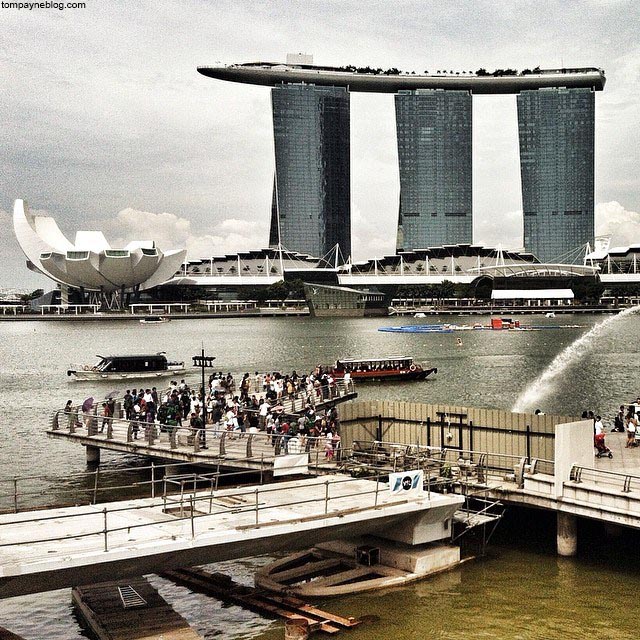
While land intensification has been an ongoing policy for development in the city for many decades, it does continue to slowly sprawl into the periphery to accommodate the rapidly growing population. Comprising only 270 sq km in total, land development issues in Singapore can be seen to epitomise land use issues across the globe (just on the small scale). We want urban 'growth' but how do we stop expanding?

I'd definitely need to spend some more time in the city to have a better perspective on sustainable development in Singapore. It's such an incredibly interesting city that seems to be developing very sensibly, but could it be doing even better? And what lessons can other cities learn from Singapore as an example?

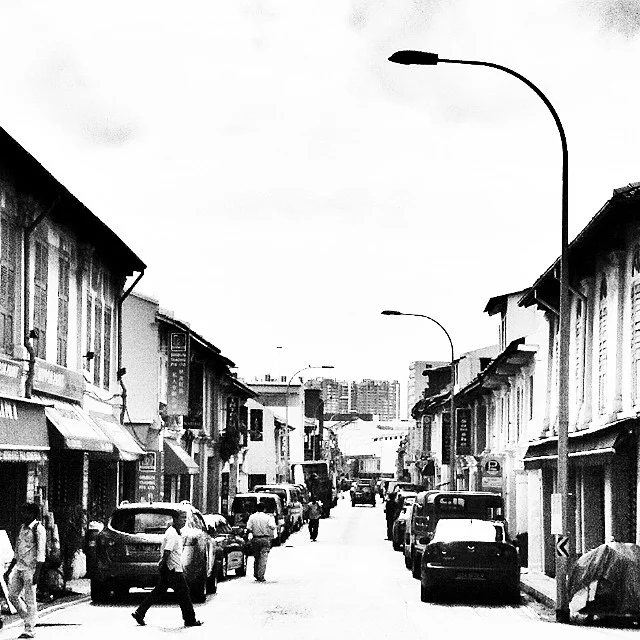
Apart from all of the big picture strategy stuff, I made the following brief observations from my quick day of walking about the city: high density, manicured gardens, not pedestrian friendly, ambitious, colourful, beautiful, amazing food and smells and of course, hot and humid! If the city had a little less cars, a few more bikes and made a bit more effort in place making and public space creation, it'd make all the difference.

I'd love to know other people's thoughts!

All photos Tom Oliver Payne.

What could cities learn from La Défense, Paris? by Tom Oliver Payne

ld-13.jpg

I've written once or twice before on the glass and steel enclave that is Canary Wharf, in London's east. La Défense could be regarded as the Parisian equivalent. While their histories differ significantly, their purpose is somewhat similar: they offer space to alleviate the cities from the pressure from intense commercial floorspace demand.

Apart from Montparnasse (and of course, the Eiffel Tower), Paris has - throughout history - enforced strict restrictions on building heights. During the 60s and 70s, as the economy became increasingly focused on services sectors, demand for office space boomed. As a result, La Défense attracted large-scale property development because it was able to offer the space for vertical growth.  

With property demand remaining strong across Paris, solutions to the problems facing planners today are not simple. The city juggles the needs of economic and population growth with transport congestion and historic conservation.

La Défense is no quick-fix. In fact, channeling thousands of workers into this major office hub places immense pressure on city systems. However, unlike London which has recently allowed for height increases across the core, Paris refuses to relax downtown height restrictions. As London's large commercial schemes now spread from Canary Wharf right across the West End, Paris remains focused on concentrating its major office developments in La Défense. The government is supporting this with an ambitious 9 year investment plan.

Which model works best? Will Canary Wharf suffer from the inner city developments which act to siphon demand? Will La Défense fail to produce what international investors expect in a world class city? 

Heading over to the La Défense precinct last week, I was impressed with the unique architecture that lines the wide pedestrian plazas. The symmetrical landscape design and interesting building shapes offer an aesthetic touch that many city's don't. But would I want to work there? Probably not. 

While it is beautiful, La Défense lacks the small-grain character that is vital to urban vibrancy - a characteristic that makes central Paris so special in the first place.

Rather than a blank criticism, this is just one simple observation of a district that I believe offers immense opportunity to solve a number of urban growth problems. If Paris can get it right through Project La Defense 2015, the area will act as a wonderful example of how to balance the needs of market-driven growth with historic preservation. As London's skyline looks bound to further fragment, perhaps there are lessons to be shared in both directions.

All photos by Tom Oliver Payne.
INSTAGRAM


Without Urban Strategy, is Australia Planning to Fail? by Tom Oliver Payne

sydney_opera_house_-_dec_2008.jpg

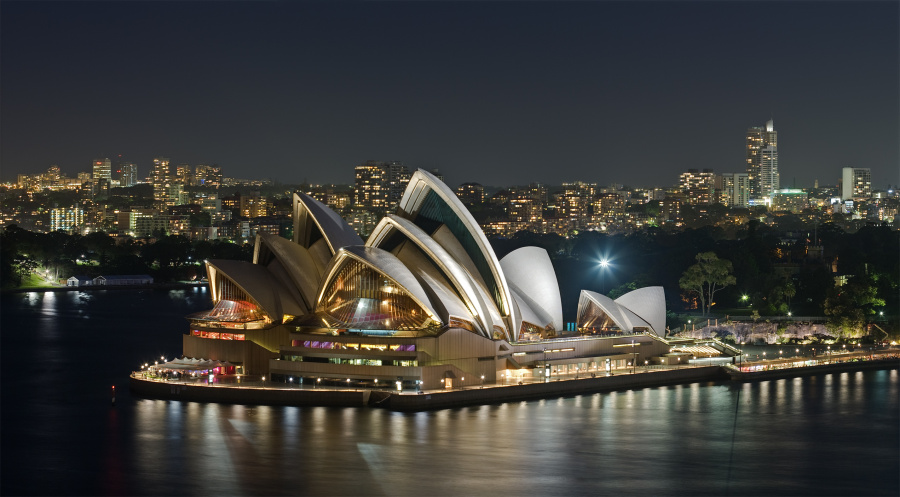
National governments across the globe are showing a growing appreciation for the economic importance of cities. In taking an increasingly strategic approach to the development and management of powerful economic and cultural urban nodes, they’re attempting to diversify economies and invest money where it matters most. In the wake of the recession, this policy shift has been particularly strong in the UK.

Australia on the other hand, seems to be moving in the opposite direction. With the end of the resources boom in sight, perhaps it’s time ‘the lucky country’ took a long, hard look at its urban agenda. For hundreds of years, we’ve been obsessed with the nation-state paradigm. But the idea of inter-national coordination has largely failed. The United Nations has no teeth, every climate talk since Rio (1992) has failed to bring practical solutions, and the global recession has presented us with panicking national governments with little control over globalised economic systems.

With over half of the world’s population now living in urban areas, we’re seeing the emergence of a network that is more about action than stubborn nationalism. Operating across international borders, our global network of cities forms the economic and environmental collaboration that national governments cannot.

As Benjamin Barber has put it, national governments are based on “ideology”, while cities are all about “getting things done”. Cities are bound together by trade and economics, innovation and entrepreneurship, common attributes and common values. Cities are where things happen; national governments are where politicians talk.

The growing realisation of the importance of cities has sparked policy shifts worldwide: Korea is scaling-up regional city growth to diversify economic activity, Poland has recently developed a national urban strategy to become economically competitive with greater Europe, and Brazil has created a City Statute to give municipalities increased power and finance.

The UK has seen the development of a Cities Policy Unit and a host of new strategies that attempt to create a fundamental movement away from federal power to that of mayors and cities. The newly appointed Minister for Cities has called for a new era to create city systems and systems of cities. The former is concerned with equipping local leaders to strengthen productivity, liveability and sustainability outcomes, and the latter is about actively supporting urban networks as a whole, including connectivity and city specialisation. This includes investing into infrastructure such as broadband, high-speed rail and airports. The Technology Strategy Board has already made substantial investments into the Future Cities Demonstrator and Future Cities Catapult, which aim to enhance urban innovation.

With growing importance on the city scale, urban political leadership is now a hot topic. Charismatic mayors like Boris Johnson and George Ferguson are winning support by implementing real solutions to environmental and economic issues. Less focused on ideology and more focused on answers, its no wonder Johnson has been titled the most popular politician in Britain over his central government counterparts.

Tucked down on the other side of the world however, we’re seeing powers taken from Australian cities and mayors, rather than given to them. After almost a decade of developing a vibrant nighttime economy, Sydney Mayor Clover Moore’s work has been badly bruised by conservative state premier’s controversial new drinking laws. O’Farrell’s arbitrarily located restrictions are not supported by any research to indicate that they will reduce violence. Instead, they look to create late night transit chaos and hamper Sydney’s buzzing nightlife economy.

Rather than developing a strategy based on citywide coordination, it seems the new legislation was an opportunity for the state premier to simply flex his political might. While Mayor Clover Moore is about “getting things done”, O’Farrell’s policies are based on political gain.

Issues such as these are all too common in Australia. As underfunded local councils struggle to coordinate important planning processes with the powerful state governments above, planning and economic development remains an under-resourced, ad hoc process. Australia is in serious need of city systems and systems of cities strategies.

Just two years ago there was progress in making this happen. Australia’s previous government created the Major Cities Unitwhich outlined key long-term priorities for urban productivity and sustainability. Highly regarded by academia, as well as infrastructure, planning and property councils, the Unit showed promise for strategic city alignment, including investment into high-speed rail.

Today, all investment into the Unit has been withdrawn and momentum towards a national urban strategy has come to a halt. Not only does Prime Minister Tony Abbott have blatant disregard for the natural environment but he also struggles to see the importance of investing into research and long-term strategy, even when concerned with economic growth.

Australia remains plagued by a three-tiered governance structure that stifles coordination: citywide governance is fragmented (dozens of local councils with no metropolitan authority), local to state government relationships are a political battle, and federal intra-city investment is non-existent.

Countries affected by recession have worked to develop national policies to diversify industry and build economic resilience. In the meantime, Australia has stood back with its eyes closed. With the resource boom beginning to slow, perhaps now’s the time for Australia to rethink how its cities can develop and integrate into the growing global urban network.

This article was originally written for This Big City and is also available in Spanish.

Feature image courtesy This Big City.

How we can design for human desire by Tom Oliver Payne

img_2950.jpg

Have you ever noticed a dirt track through a public park or a group of people who meander across a street in seeming defiance of authority?

Well, that's because we, as humans, utilise something called 'desire lines'. Coined by French philosopher Gaston Bachelard, desire lines describe the human tendency of carving a path between two points (usually because the constructed path takes a circuitous route).

Across the globe urban authorities tend to try to control people's walking desires by erecting fences and walls. This illustrates nothing but a disrespect for human desire.

Instead, planners and designers should be acting to adjust urban infrastructure to appreciate the way in which humans utilise urban space.

The image above shows a terrific example from Gladesville in Sydney. Travelling from the city's north into the Inner West, one must traverse a number of waterways. For private cars, this journey is relatively direct and well-signed. For pedestrians and cyclists on the other hand, the journey is indirect and rather complex, leaving people to navigate multiple underpasses and complicated road-crossings. Not what you want on a hot Sydney summer day. As a result, pedestrians and cyclists have forged their own path which allows them to avoid a good 300m underpass walk. Instead of observing and redesigning the space to accommodate for the desires of people, the roads authority has continually tried to stop the movement of people by erecting fences at multiple sections along the path.

Alongside Gladesville Bridge, Sydney

Alongside Gladesville Bridge, Sydney

Is Sydney a city for people or a city for vehicles? It seems that the Roads and Maritime Services would prefer it to a place for cars (I guess it's all in the name, right?).

As cities move from being overly engineered and private vehicle-dominated, observing desire lines will act as an incredible tool in urban design, place making and urban management.

In the words of Mikael Colville-Andersen, "Instead of erecting fences to restrict them in the behaviour, they [Copenhagen Council] actually make it accessible for them and make it easy for them. Because people - at the end of the day - decide on where they want to go... This is the way forward in designing our cities for people". Check out his great little film below: