
Jane Jacobs reminded us of the city's most important element and inspired a generation of urbanists. Through a single photograph, Colville-Andersen has sparked a new movement that is helping to solve the greatest urban challenge of our time.
Jane Jacobs was revolutionary. By critiquing the modernist approach of twentieth century urban thinking, she taught us that traditional planning policies oppressed and rejected the single most important element of cities: people. Her ideas sparked decades of urban social movements, resulting in the preservation of inner city neighbourhoods across the globe. In the age of rationalism, she reminded us that cities are complex and chaotic. She reminded us that cities are human. Jane Jacobs (aka “The Crazy Dame”) inspired a generation of urbanists.
She reminded us that cities are human.
While Jacobs’ words continue to reverberate through history, this century we are faced with a new set of challenges. One in particular, dictates the way we govern, design and build urban spaces; it burdens our health care and kills our planet. Today’s greatest urban challenge is the car.
Our addiction to the car has made us crazy. We teach our children to fear the street and we fight wars to ensure we have reliable access to oil. Our obsession with the car controls just about every aspect of our urban lives. Like a drug however, it is destroying us from the inside out, not only is our atmosphere polluted and our streets congested, but every new road, car park and set of traffic lights makes our cities a little less livable. We have once again forgotten that cities are human.

Change however, is beginning to take place. We’re realising that there is a cleaner, more efficient and more human alternative to the car. Slowly but surely, we are now seeing the emergence of a global bicycle renaissance. This global movement can be traced back to a single photograph.
I started taking more photos of elegantly dressed commuters on bikes, and people kept reacting to them… after 6 months I thought I’d start a blog. It just exploded.
Back in 2006 Mikael Colville-Andersen was a film director. “I took a photo on my morning commute, which naturally involved bicycles… It wasn’t a great photo,” he told me, “it was just nice morning light”. A short time after uploading to Flickr, the photograph had received hundreds of hits and dozens of comments from around the world. “These comments started to appear from America like, ‘Dude! How does she ride a bike in a skirt?!’ So, I started taking more photos of elegantly dressed commuters on bikes, and people kept reacting to them,” he said, “after 6 months I thought I’d start a blog. It just exploded.”
At the time Mikael had no idea that Cycle Chic – as he later coined it – would become a global phenomenon. Nor did he know that it would spark an entire movement in new urban thinking. Just like Jacobs, Mikael was not trained in urban planning, but has become one of the most influential urbanists of our time.
It just so happens it was all by accident. “I didn’t realise these photos would be interesting to people,” he told me, “regular people, in regular clothes, using bikes as transport in the city… An entire generation of people all around the world had been told that cycling is sport and recreation. I was just a Copenhagener”.
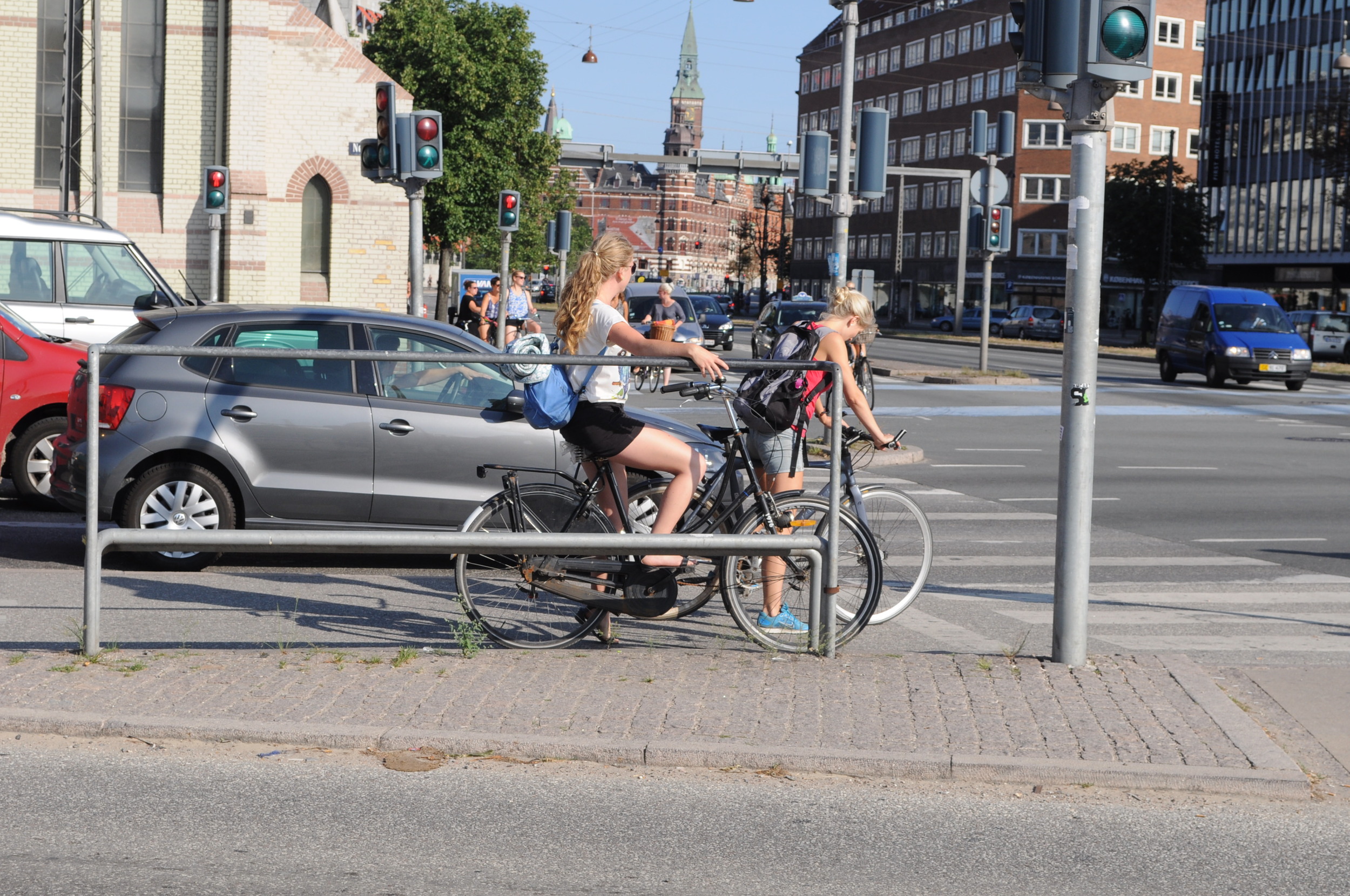
Bicycles were once a common form of mobility in cities and towns around the world. Riding a bike wasn’t necessarily a sport or a sub-culture – it was simply a part of everyday life. The mass production of vehicles saw all of this change. The rise of the car after World War II completely transformed cities – first across the USA, and then across the world. Dense urban districts centred on transit hubs and commercial districts, spread into vast, car-dependant landscapes.
Unlike most of the world however, the rise of the car was short-lived in Denmark. As streets congested, air quality deteriorated and pedestrian fatalities mounted throughout the 60s and 70s, people took to the streets to demand equality for cyclists and pedestrians. In response, an extensive network of cycle paths was developed, traffic calming measures were implemented and people were encouraged to cycle. Today, riding a bike is once again part of everyday life: 37% of Copenhageners cycle to school or work. This figure stands at just 2% in Britain and 1% in North America.
After Cycle Chic and then Copenhagenize.com burst with internet traffic, Mikael decided to “give up film directing to see where this bike stuff was going”. His photographs had already sparked a bicycle buzz, and fashion labels were quickly jumping on the bandwagon. Fortunately however, the fad didn’t end there. In addition to online media, Mikael began promoting Copenhagen’s bicycle culture to urban planners and policy makers. The rest, it seems, is history.
Mikael could never have imagined that his 2006 Flickr image would become known as ‘the photo that launched a million bicycles
Just about every city in the world is now talking bikes. New York has recently rolled-out a massive bike share scheme to complement it’s new cycle paths, Hangzhou has launched the world’s largest bike share programme and the UK central government just commenced a multi-million pound cycling infrastructure scheme. The New York Times has even reported that we’re experiencing the “End of Car Culture”. Mikael could never have imagined that his 2006 Flickr image would become known as ‘the photo that launched a million bicycles’, as one journalist put it.

'Conversation lanes' on the world's busiest bicycle thoroughfare
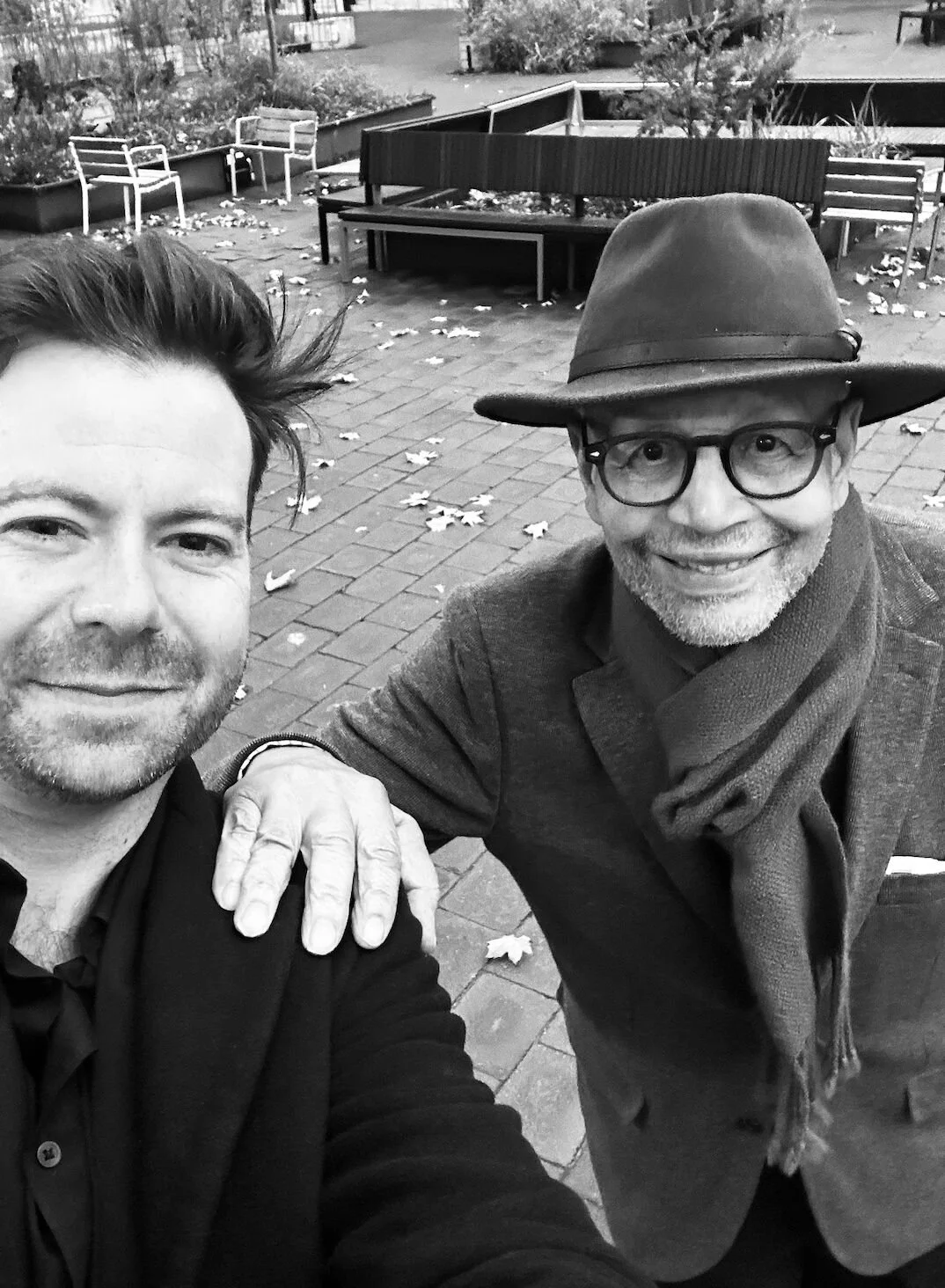
Sitting with Mikael at a café in central Copenhagen, we watched dozens of people passing on their bikes. Smiling at us as they passed, or stopping to chat with friends on the street, it became obvious to me that Mikael could envision cities of the future because he already lived in one. As Mary Embry from Copenhagenize Design Co. once said, “People work hard to make sure their cities are as user-friendly as Copenhagen… World-class cities want in on the cycling infrastructure and they look to Copenhagen for inspiration and guidance.” Copenhagen truly has become the model for livable cities.
At the café Mikael soon asked me, “you up for a ride on the Bullit?” as he looked over at his cargo bike parked on the street (#parkwhereyouwant). Standing at 6’2”, I awkwardly clambered into the front carrier. Conscious of the fact that my lanky legs were up by my ears, it didn’t take long before I was reminded where I was. In Copenhagen, you’re not judged on what bike you have, what ‘style’ you have, or how ridiculous you may look, as long as you’re on two wheels – anything goes.
Mikael took me around the city to show off some its most innovative bicycle infrastructure initiatives. First up was Dronning Louises Bro: the world’s busiest bicycle thoroughfare. Now, if someone took you to the busiest car thoroughfare in the world, you probably wouldn’t want to stay for long. It’s quite the opposite when people are riding bikes: this place had some serious energy.
A bridge where over 30,000 people come through on bikes each day makes for pretty great socialising and people-watching. So much so that the City even decided to widen the cycle paths to make ‘conversation lanes’. Bikes aren’t just great for transport: they’re also a brilliant place making tool. Unlike cars – Mikael reminded me – you can actually make eye contact with, and talk to people when they’re riding a bike.
Cruising around the city to check out Copenhagen’s bicycle footstands, commuter counters, and of course, the new Cycle Superhighways, I was then shown where the City had installed cycle paths to complement commuter’s desire lines. First promoted by William H Whyte back in the 60s, the team at Copenhagenize is now at the forefront of utilising observational techniquesfor pedestrian and cycle planning. Just like Jane Jacobs, Mikael is working hard to make cities less rational and more organic.
Working closely with media, architects, planners and policy makers around the world, Mikael is continually exposed to the ideas and projects that are reshaping cities. But to him, there’s only one city that is really doing it right. Copenhagen has not become complacent as the world’s greatest cycling city, it’s continually striving to increase bicycle modal share and improve the experience of cyclists. Mikael’s goal is to communicate this culture to the rest of us… I guess ‘Copenhagenize’ says it all.
Through a single photo back in 2006 Mikael has showcased a place where cars no longer dominate. And now, city-by-city, a new urban social movement is taking shape. We are beginning to mend the urban fabric that the car has torn to shreds. Just like “The Crazy Dame”, Colville-Andersen has reminded us that cities are human. By inspiring a generation of urbanists, he’s also helping to solve the greatest urban challenge of our time.
Check out this article posted on the Urban Times here.
All photos/text by Tom Oliver Payne.